


Key Takeaways
- Turvo stands out for freight brokers and 3PLs that want freight management built around a connected ecosystem, combining transportation workflows, collaboration, visibility, and integrations so customers, carriers, teams, and specialized freight technologies can work around shared operational context.
- Infios Transportation Management, formerly MercuryGate TMS, is designed for organizations managing more complex freight networks, with strengths in multimodal planning, optimization, international transportation, visibility, and enterprise-scale execution.
- McLeod Software is a strong fit for carrier-heavy, brokerage, and hybrid transportation businesses that need freight execution alongside accounting, EDI, carrier workflows, back-office functionality, and a broad integration ecosystem.
- Choosing the right freight management system should account for operating-model fit, workflow coverage, integrations, automation, transportation modes, customer and carrier experience, and the ability to scale without creating unnecessary operational complexity.
The rate you negotiate is only part of a load’s profitability. The time your team spends entering shipment details, correcting mistakes, chasing updates, and preparing invoices also affects what your business earns from that move.
A freight management system can help reduce those operating costs, giving brokers and 3PLs more room to protect margins without compromising service. The buying decision starts with understanding which platform can remove the most friction from your daily work.
Below, we review three freight management systems to help you compare their operational strengths, business fit, and trade-offs before building your shortlist.
1. Turvo: Best for Connected Freight Operations and Scalable Growth
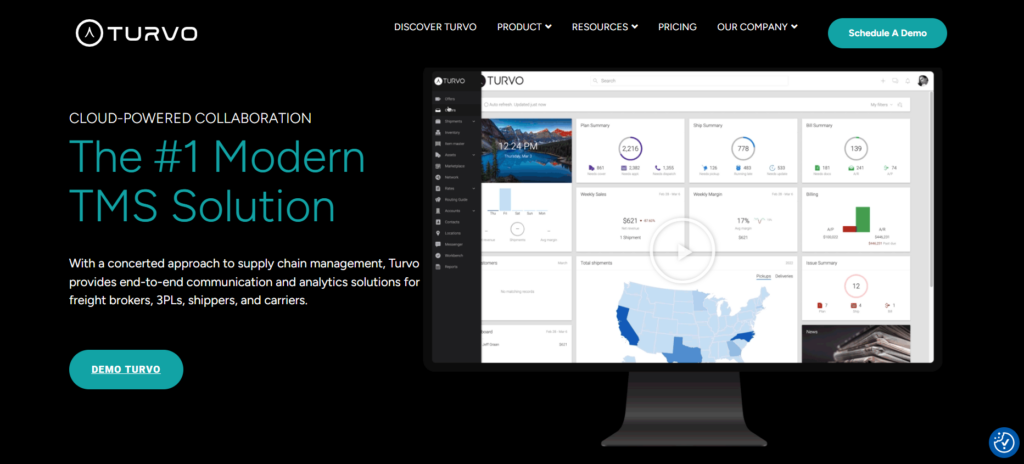
Turvo is a modern, cloud-based TMS and collaboration platform built primarily for freight brokers and 3PLs that need to manage freight from the initial customer order through delivery and settlement.
For a new brokerage, it provides a structured foundation for organizing shipments, coordinating carriers, and keeping customers informed as the business moves beyond spreadsheets.
For an established logistics provider, Turvo connects planning, execution, tracking, documents, and financial workflows so employees spend less time transferring information between departments and systems.
Its Collaboration Cloud brings customers, carriers, and other partners into relevant shipment workflows, while integrations connect the accounting, warehouse, tracking, and carrier tools the business already uses.
This connected ecosystem reduces manual handoffs, improves collaboration, and gives teams greater operational visibility across the freight lifecycle. It helps brokers and 3PLs handle more shipments while keeping the additional coordination and complexity of growth manageable.
Turvo’s Key Capabilities and Benefits
1. Manage More Shipments Without Overloading Your Team
More freight creates more work before and after the truck moves. Each shipment needs planning, carrier coordination, status updates, documents, and settlement, and disconnected processes multiply that workload as volume increases.
Turvo brings these activities into one freight management environment. Shared shipment records, configurable workflows, and connected communication help employees carry work forward without repeatedly rebuilding the shipment’s context.
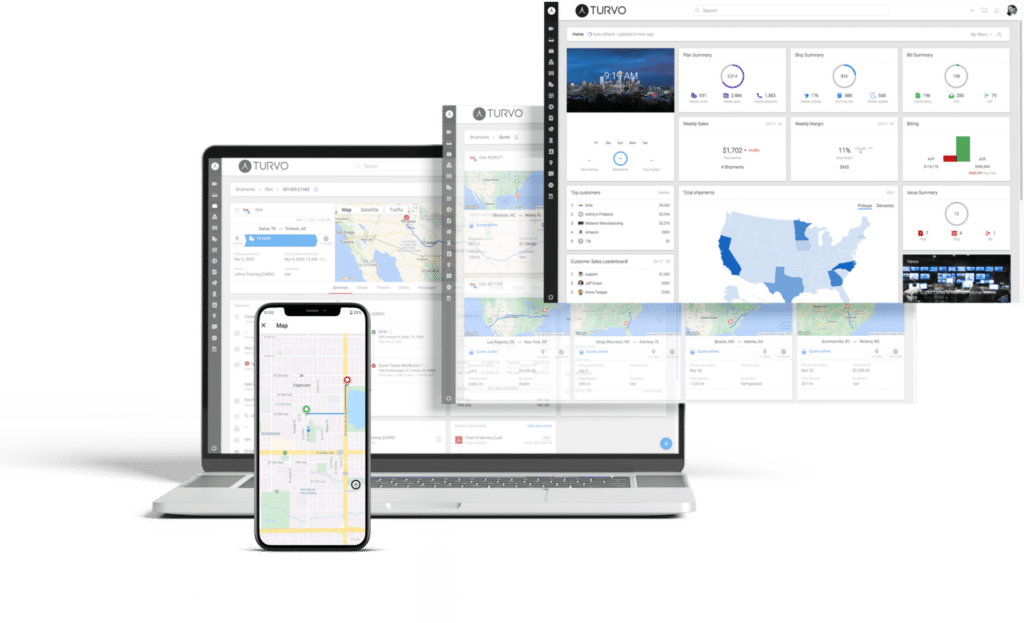
For example, customer service can review the shipment’s progress and conversations while operations continues managing execution. Finance can access the supporting information as the shipment moves toward settlement.
The business benefit is the ability to handle more freight without increasing repetitive administrative work at the same rate. Teams have more time for customer relationships, carrier coordination, and shipments that need direct attention.
2. Move From Customer Orders to Covered Loads With Less Rework
Freight planning slows down when operators have to rebuild customer orders in another system, check shipment requirements separately, and manually repeat the same carrier-offering process.
Turvo’s order-to-shipment planning lets teams organize one or multiple orders into shipments with the relevant routes, dimensions, capacity requirements, and cost allocations. Connected order-management systems can supply information for planning, reducing repeated data entry.
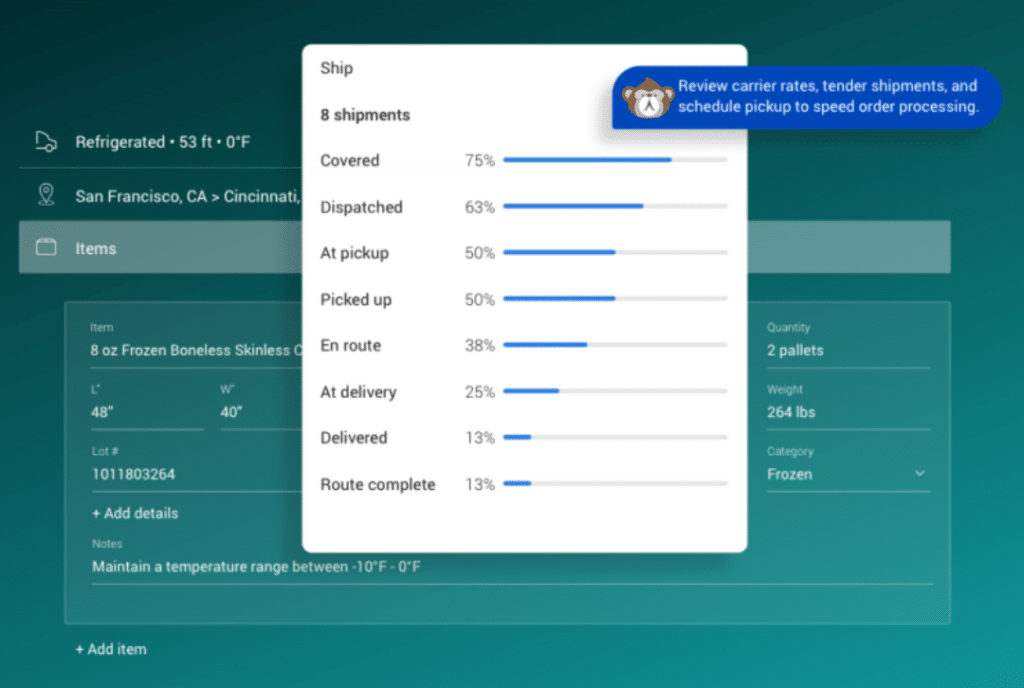
Routing guides support the next step by applying rules for offering shipments to carriers, carrier groups, or bid boards. Teams can establish a consistent process for seeking coverage while retaining responsibility for the operating decisions.
For brokers and 3PLs, this connects customer demand more closely to shipment execution. Less time is spent transferring details and repeating routine steps, leaving more attention for loads with unusual requirements or difficult coverage.
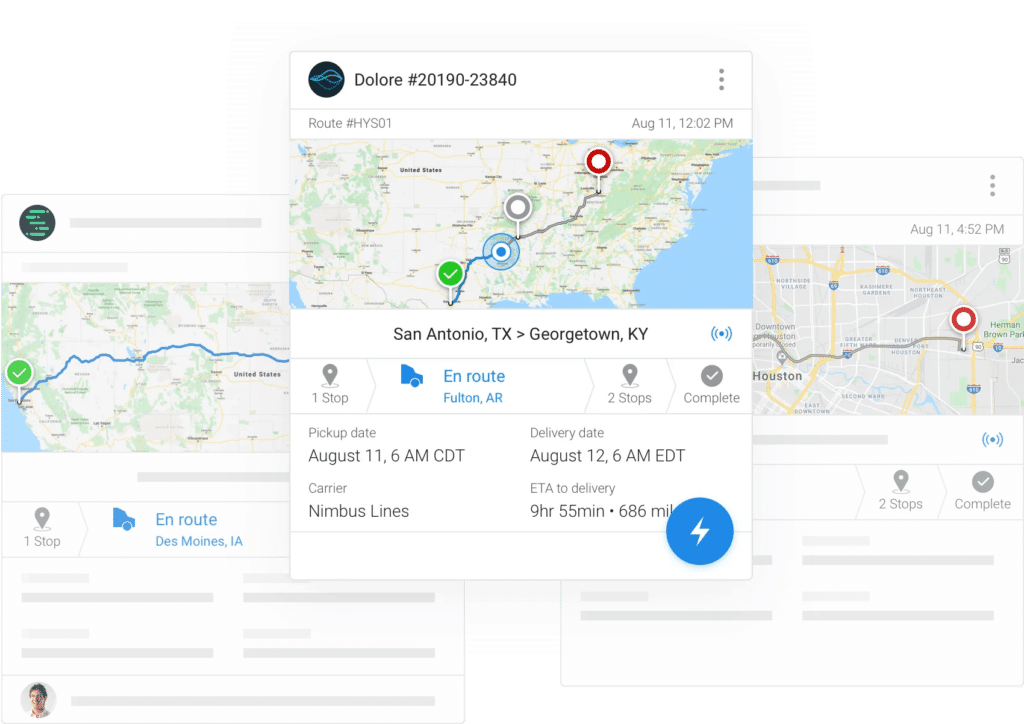
3. Deliver Better Customer Service With Less Status Chasing
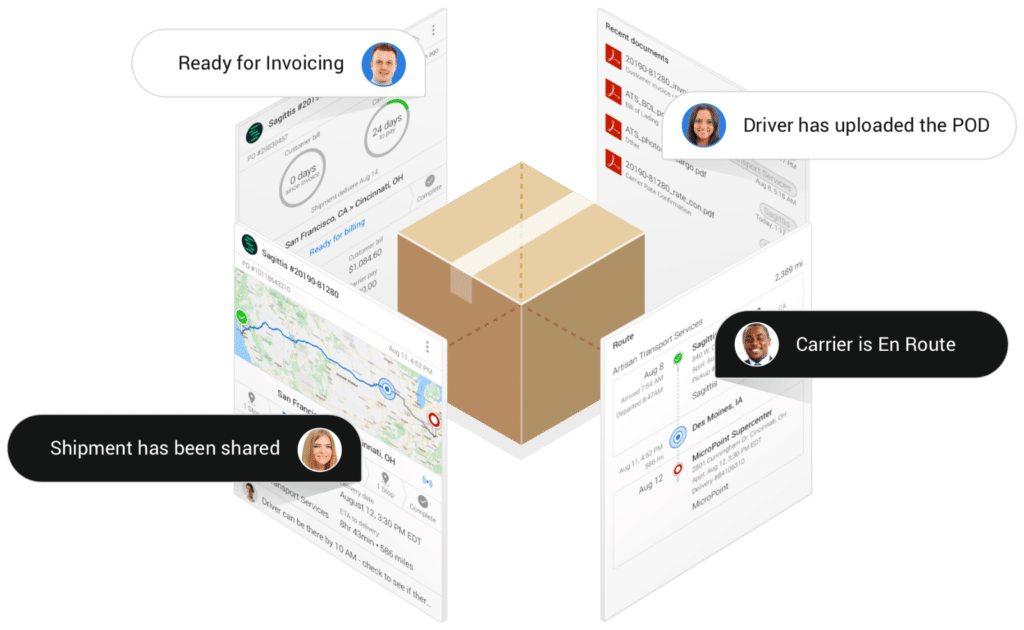
A customer asking for an update can set off several internal steps: check tracking, contact the carrier, find the latest message, and send a response. Repeating that process across a large shipment book consumes time that could go toward solving actual service problems.
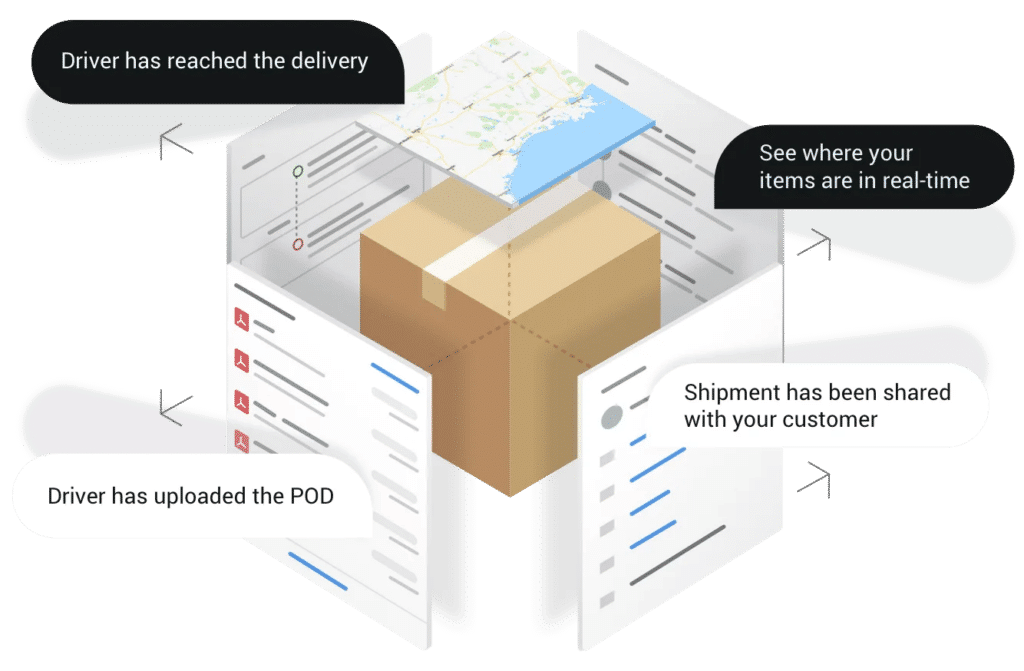
Turvo’s Collaboration Cloud gives customers and carriers access to relevant shipment information through shared workflows and links. Messages, documents, and updates stay connected to the shipment, helping participants understand its progress and what has changed.

This allows a brokerage or 3PL to make visibility part of the service it provides. Customers can access relevant information directly, while employees have the context needed to answer more detailed questions.
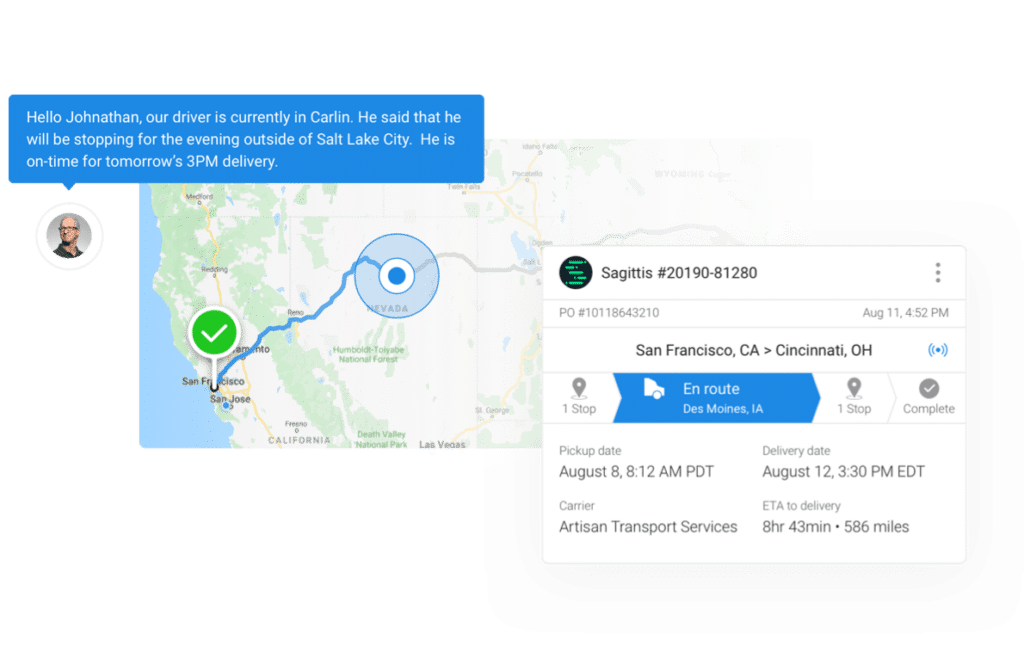
The result is a more transparent freight management experience with fewer routine information requests and less reliance on an employee to relay every update between parties.
4. Protect Delivery Commitments by Acting on Exceptions Earlier
When a truck is running late, the operational priority is understanding the impact and coordinating the next step. Teams need to know which shipment is affected, what the customer expects, and whether the delivery appointment needs to change.
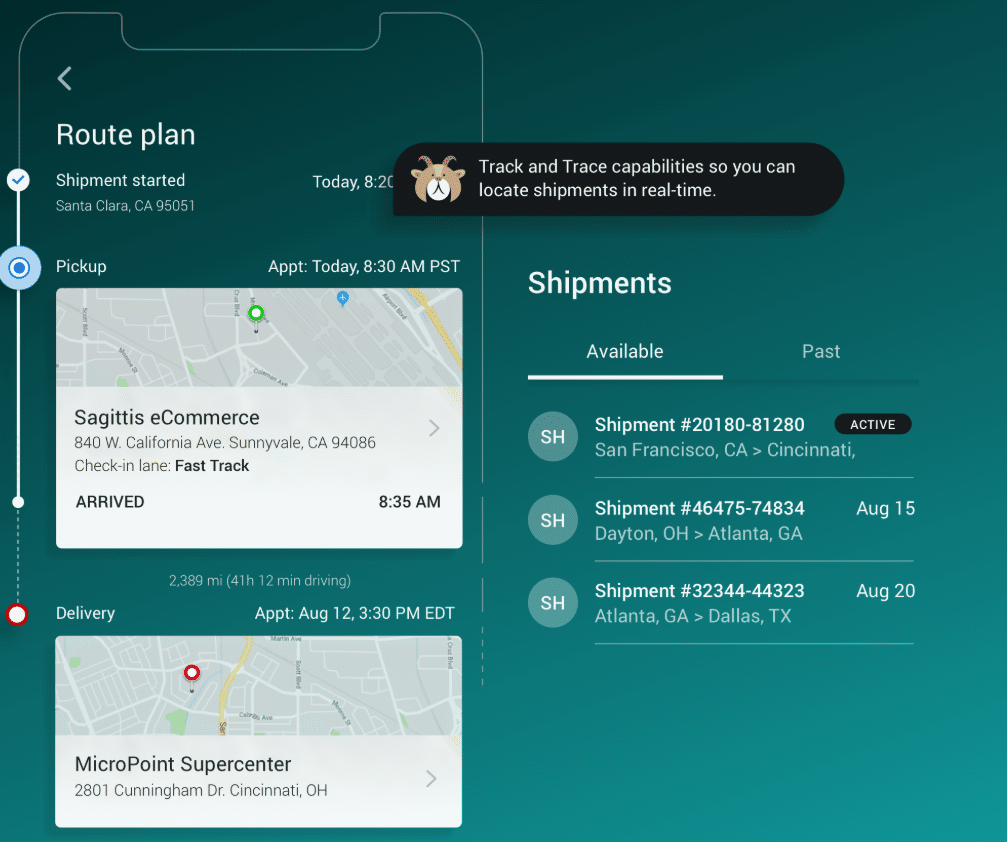
Turvo’s visibility capabilities bring shipment status together with alerts, communication, documents, and execution context. Location information from the Driver App and integrations with telematics and ELD systems helps teams monitor progress with less manual follow-up.
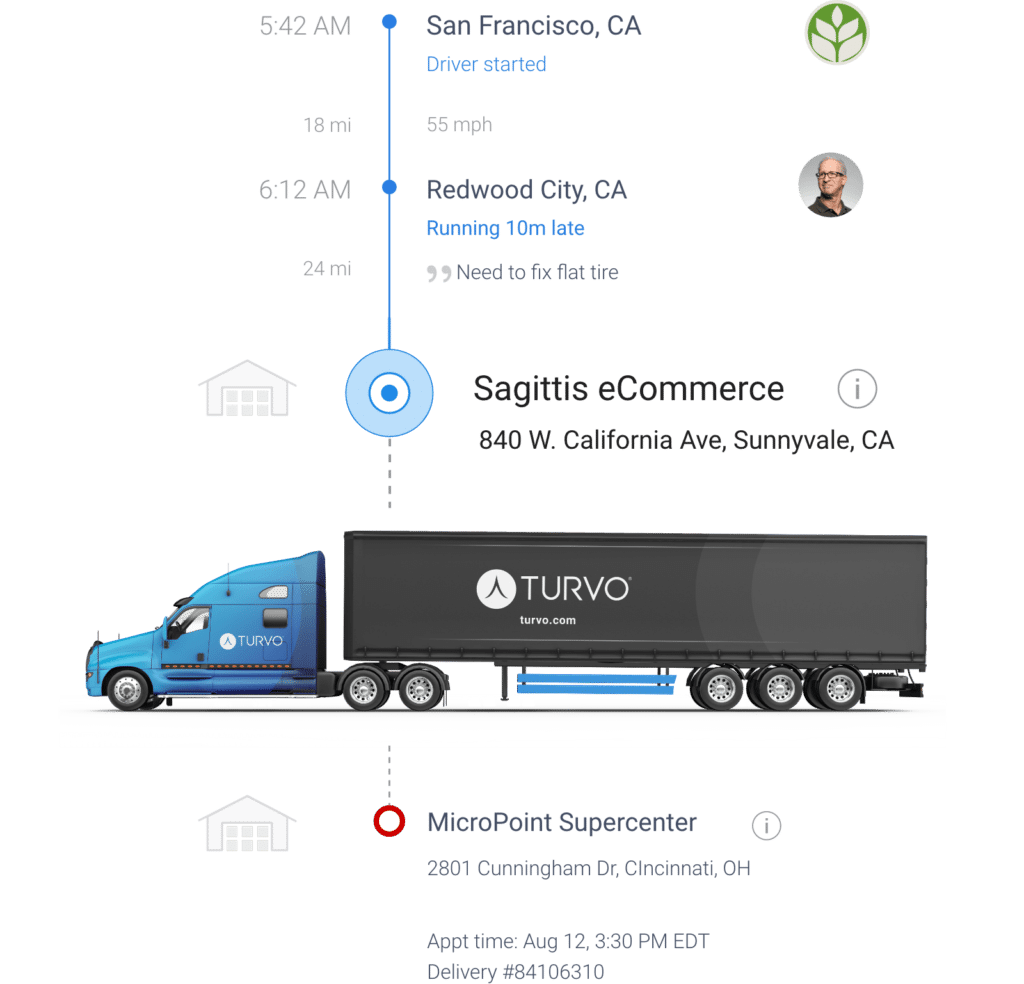
Operators can focus on shipments that need intervention and use the surrounding information to coordinate with carriers, customers, and facilities. A delayed arrival can be addressed within the same environment used to manage the shipment.
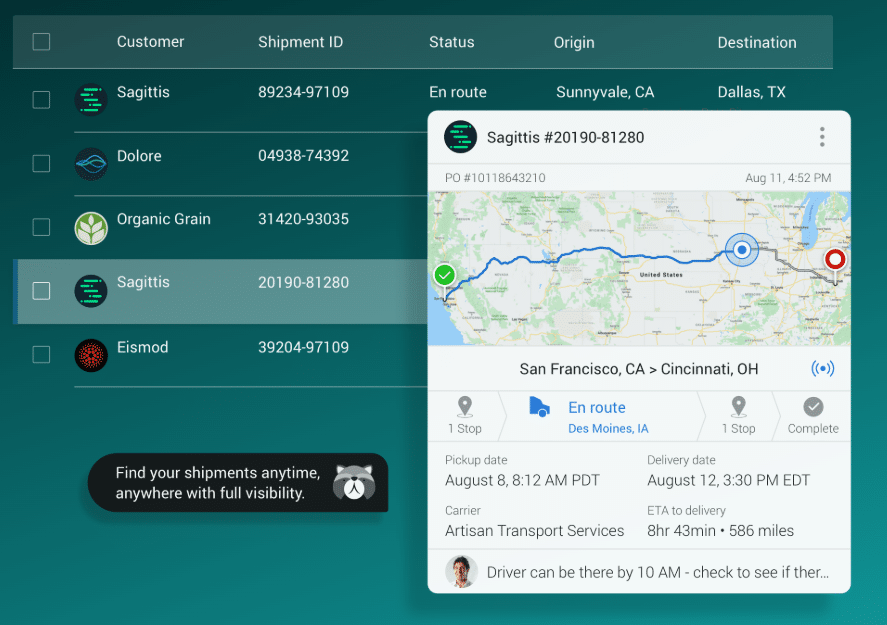
This supports earlier intervention and a more informed response when service is at risk. Customers receive clearer updates, and teams spend less time reconstructing what happened before they can act.
5. Reduce Pickup and Delivery Friction With Better Appointment Coordination
A covered load can still run into problems if the carrier, facility, and operations team are working from different appointment information. Booking changes and uncertain arrival times create additional calls and make it harder to keep freight moving to plan.
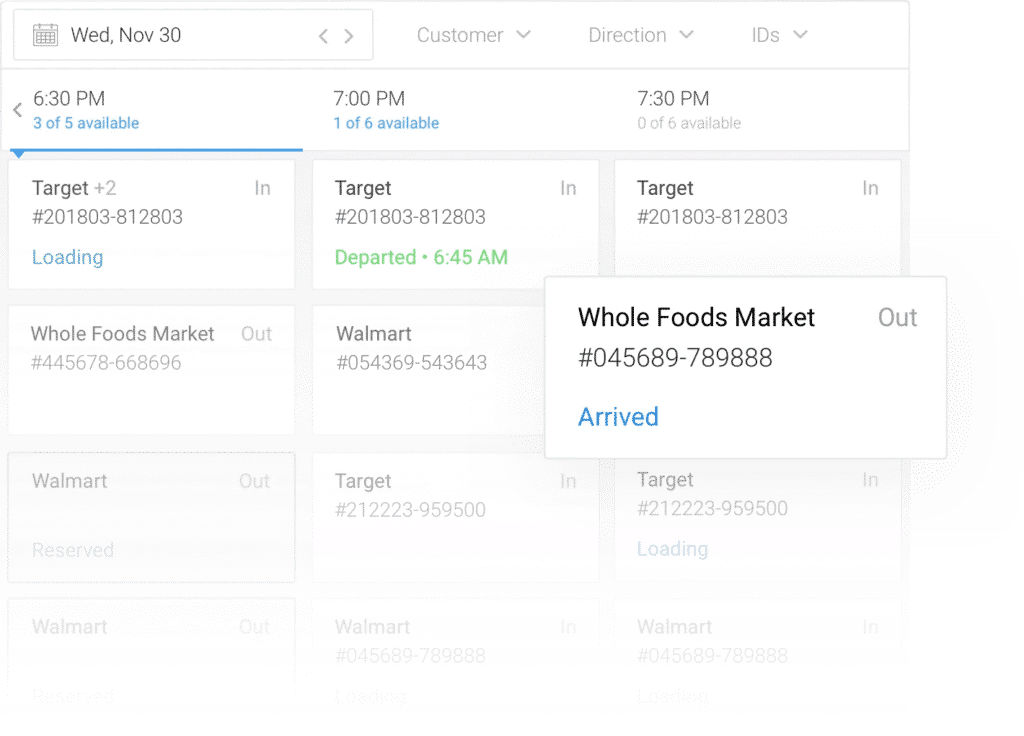
Turvo Appointment Scheduling connects appointment slots with order, shipment, customer, and carrier details. Self-service booking lets partners participate in scheduling, while truck-status and arrival and departure updates provide a clearer view of facility activity.
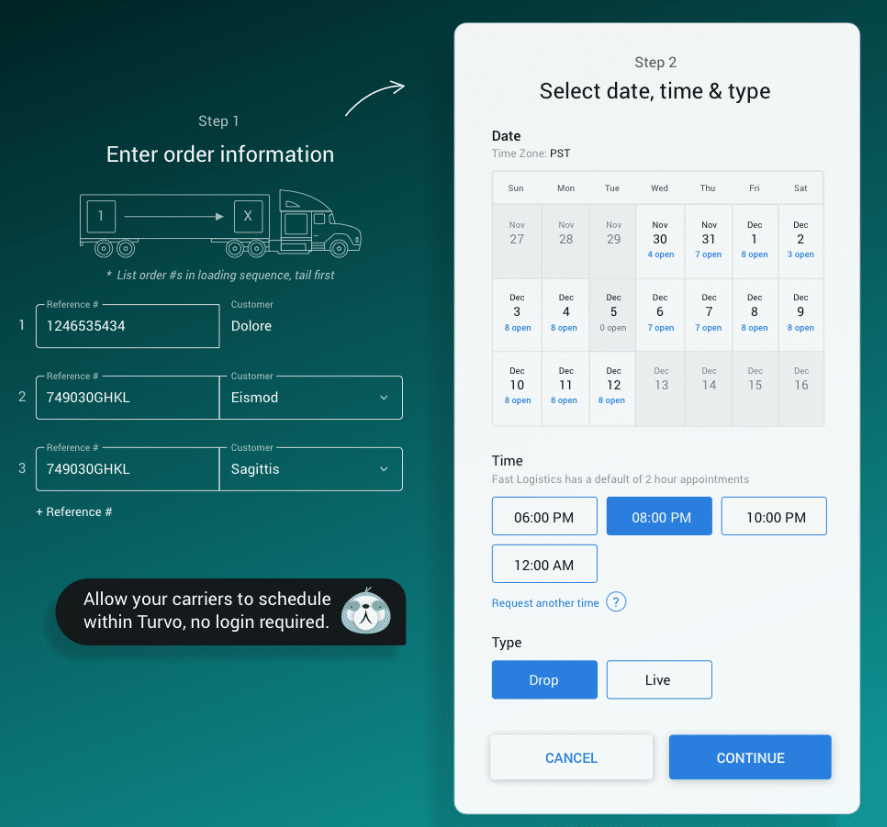
When a shipment is delayed, teams can review its status alongside the schedule and coordinate an adjustment. This helps reduce the back-and-forth involved in checking availability and explaining changes to each participant.
For brokers and 3PLs managing multiple pickups and deliveries, connected scheduling makes facility coordination part of the freight workflow and helps limit avoidable disruption at either end of the journey.
6. Get Delivered Freight Ready for Settlement With Less Document Chasing
Delivery does not complete the administrative work on a shipment. A missing proof of delivery or a document buried in someone’s inbox can leave operations and finance waiting before billing or payment processes can move forward.
The Turvo Driver App allows drivers to share shipment updates and capture documents such as bills of lading and proof of delivery. Those documents remain connected to the transportation workflow, making them easier for the relevant teams to access.

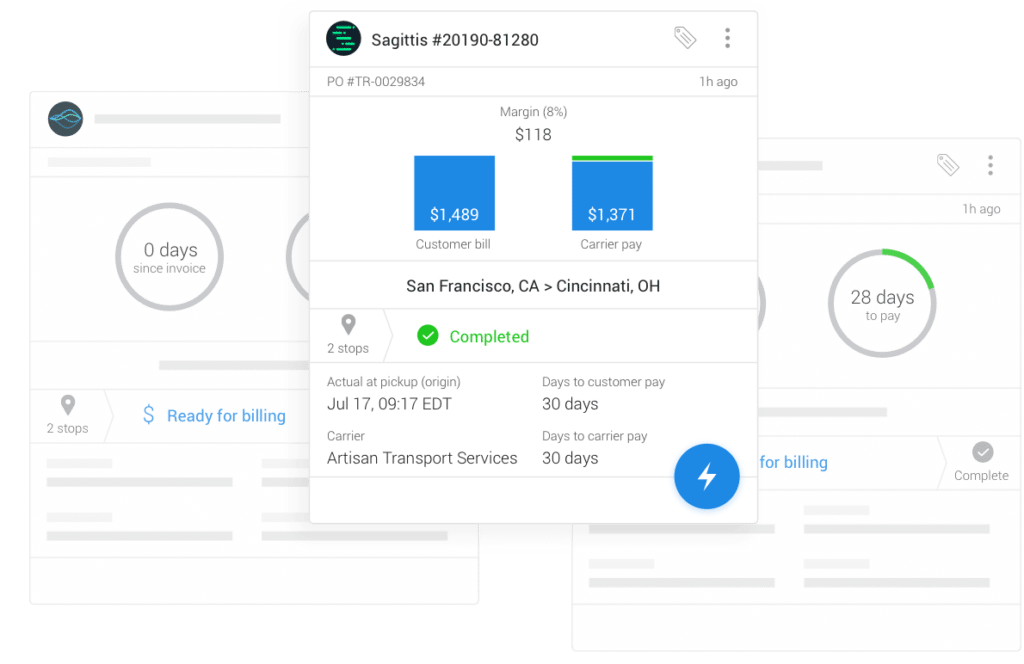
Combined with Turvo’s settlement workflows and accounting integrations, this helps preserve the information needed as freight moves from execution to financial processing.
For a brokerage or 3PL, fewer documents need to be requested, forwarded, and matched back to a shipment manually. Finance can work from a more complete operational record, helping reduce the information gaps that hold up settlement.
7. Expand Your Freight Business Without Multiplying Disconnected Systems
As a logistics provider grows, its freight management system needs to work with new customer requirements, carrier tools, and internal applications. If each addition creates another manual transfer, the technology stack becomes harder to operate.
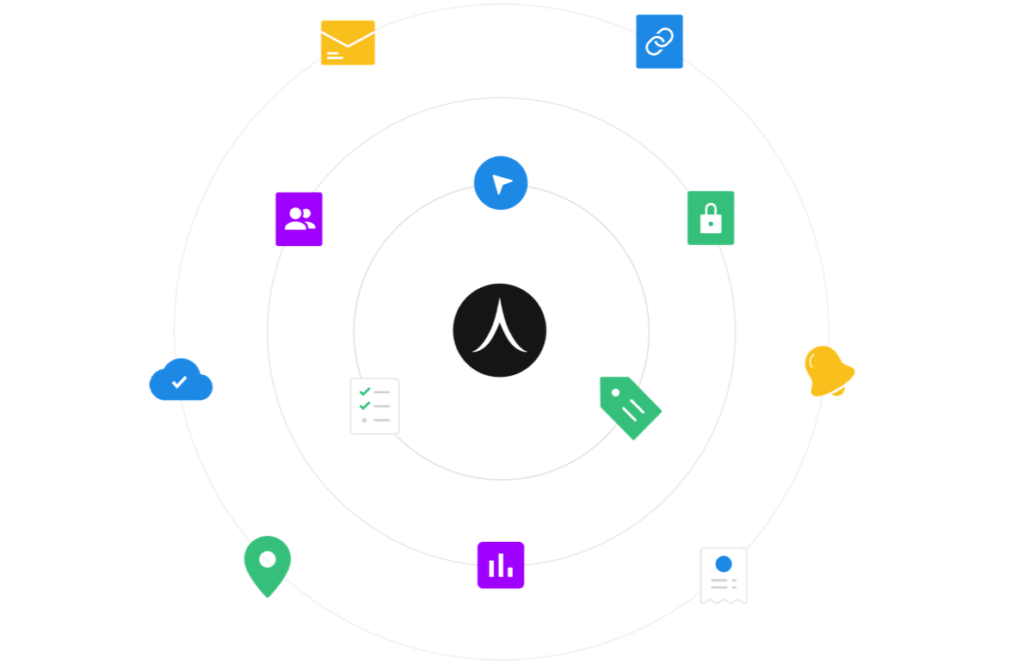
The Turvo Integration Hub supports connections to accounting and ERP platforms, warehouse systems, load boards, tracking providers, and carrier tools. Public APIs, pre-built integrations, webhooks, and data-import tools provide ways to exchange information across the stack.
Teams can connect specialized systems around the transportation workflow, helping order, shipment, and financial information move between the applications that need it.
This flexibility matters when an established brokerage replaces its TMS or a growing 3PL adds services. Turvo can remain the freight management foundation as the business develops its wider technology environment, reducing duplicate work and unnecessary operating complexity.
8. Identify Where Service and Margins Need Attention
Moving more freight does not automatically mean the business is performing better. Leaders also need to understand which customers and lanes are profitable, how carriers are performing, and where recurring operational problems need attention.
Turvo Analytics brings operational and financial data into customizable dashboards and reports. Teams can examine customer, carrier, and lane performance, review trends, and use scorecards to support ongoing business reviews.
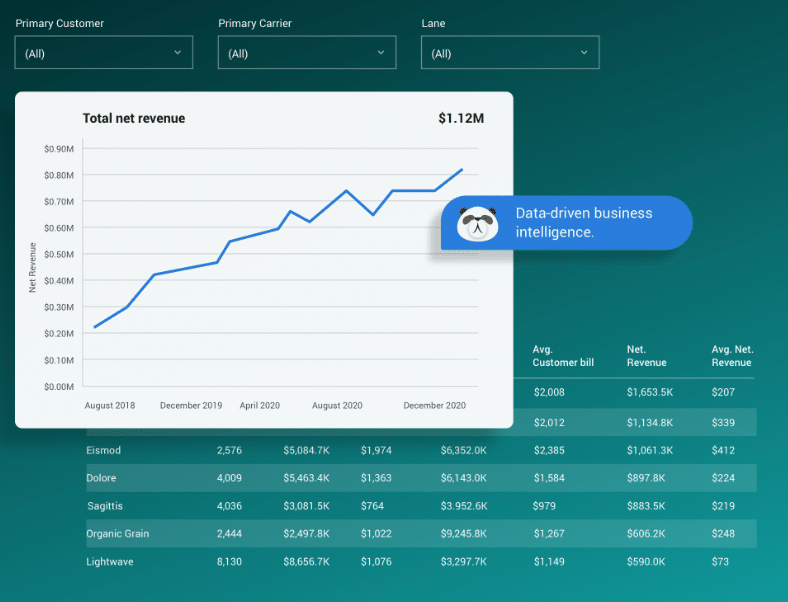
That information helps managers decide where to investigate costs, address service issues, or reassess how freight is being handled. Account teams can also use performance data to make customer conversations more specific and useful.
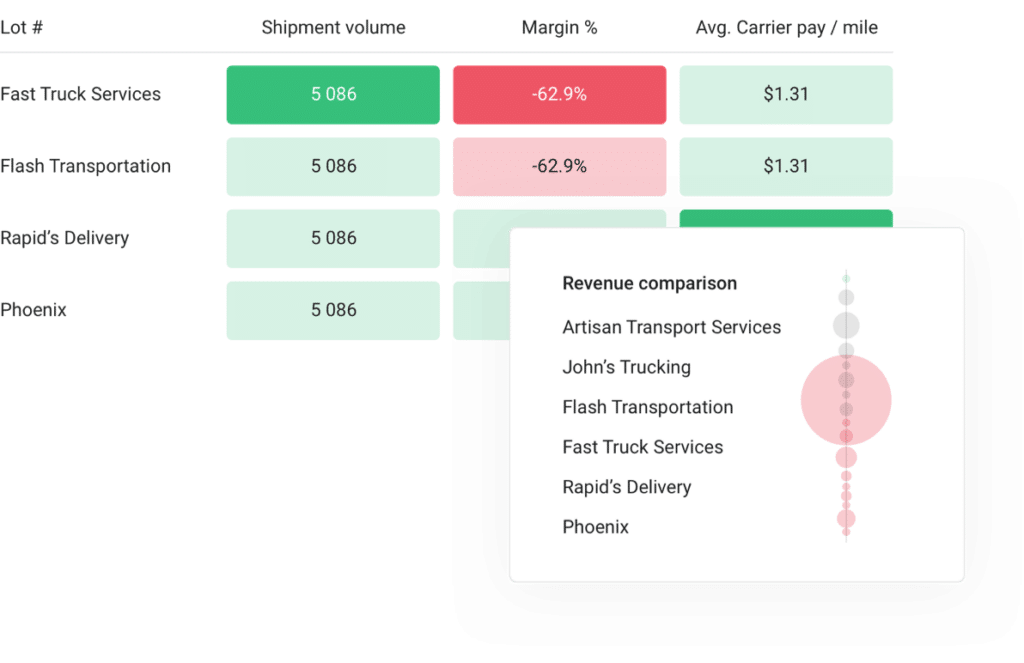
By connecting management reporting to everyday freight activity, Turvo helps brokers and 3PLs evaluate growth alongside the quality and economics of the service they deliver.
Where Turvo Shines
- Continuity from planning through settlement: Turvo connects shipment execution with communication, documents, and financial workflows. Teams can carry information through the freight lifecycle with fewer manual handoffs between departments.
- Customer service built into freight management: Shared visibility and contextual communication help brokers and 3PLs keep customers informed while reducing the operational burden of repeated status requests.
- A connected ecosystem of freight tools: Integrations and public APIs let businesses connect load boards, carrier tools, tracking providers, accounting systems, and other applications around their transportation workflows.
- Usability across daily operations: A modern interface, search, filters, and consolidated shipment context help employees find information and manage their work with fewer disconnected workarounds.
- Support for the transition and ongoing use: Data migration, onboarding, training, post-go-live hypercare, and ongoing support help teams establish the processes needed to use the system effectively.
Turvo Customer Reviews
Bradley J., Vice President of Customer Operations, said, “I think one of my favorite parts is Turvo Academy. Since we invest heavily in training our team to help them get up to speed, Turvo Academy helps onboarding go smoothly, with live examples that help our employees understand the platform. We have received a lot of positive feedback on the training.”
Kyle R., Director of Sales, said, “The best thing about Turvo is that your success is their success. The Turvo team goes out of its way to ensure we have everything we need to be a successful business.”
Brian Hasting, Veritas Logistics, said, “Making the decision to partner with Turvo was simple — it’s the most modern and innovative TMS on the market. It’s given our operators the ability to digitize and streamline operations, and our customers benefit from faster, more efficient shipment execution and service.”
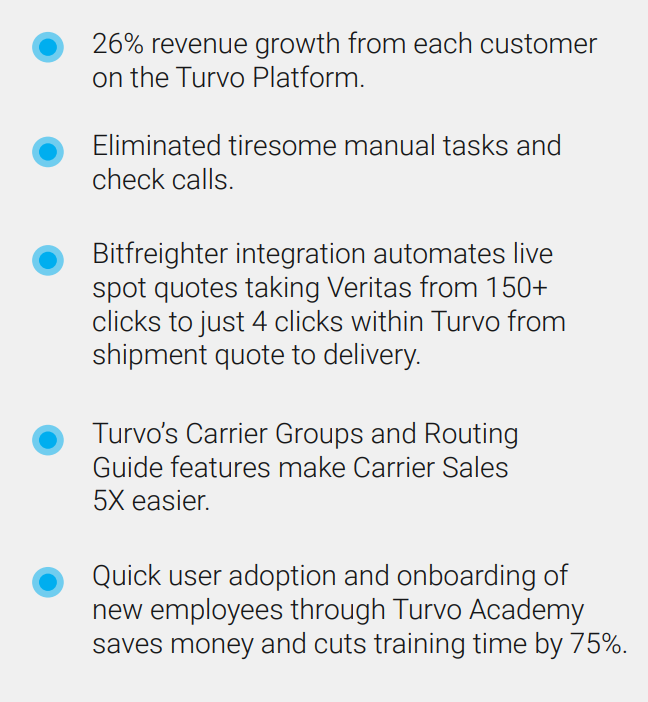
Ryan Pamplin, Director of Innovation at Taimen Transport LLC, said, “Turvo is truly flexible enough to leverage the full power of the platform anywhere and from any device, which allows our team to work remotely from home, on the road with their customers, or around the office in our various flex spaces. Managing transportation in your supply chain across thousands of emails, bulky portals, and disparate channels is inefficient. Trading partners, internal team members, and external service providers being reliant on a single computer at a stationary desk is the past. Real-time collaboration inside each individual shipment, with shareable links for tracking and web- or app-based access, is Turvo. It’s the future of freight, here today. Our employees service their customers with optimal efficiency every day of the year, and it wouldn’t be possible without Turvo.”
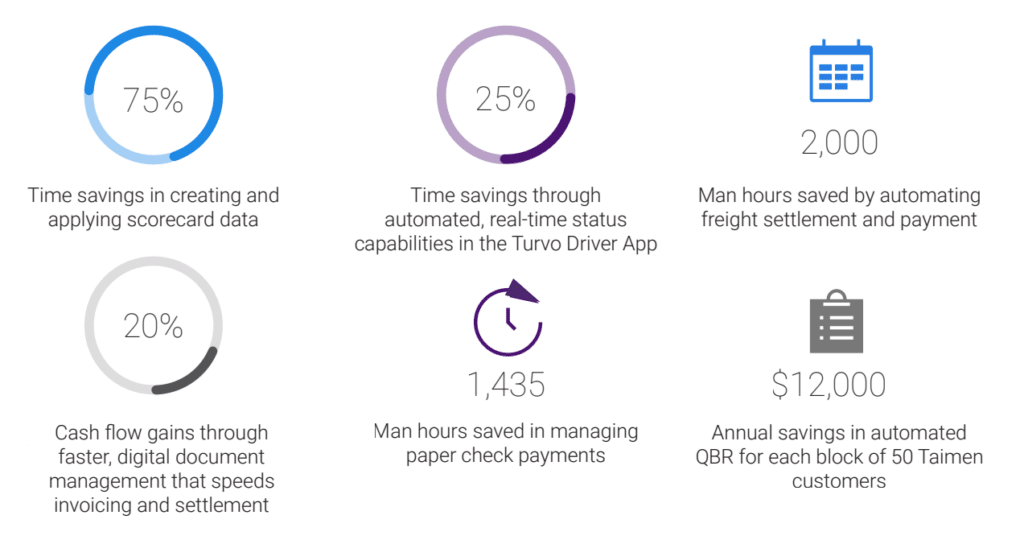
Who Turvo Is Best For
- Growing freight brokerages managing higher shipment volumes: Teams that need to handle more freight can connect planning, carrier coordination, tracking, and settlement while reducing repetitive administrative work.
- 3PLs managing transportation for multiple customers: Logistics providers can organize customer orders, shipments, appointments, documents, and communication within a shared operating environment.
- Established brokerages replacing a dated TMS: Businesses seeking better usability, integrations, and customer visibility can evaluate Turvo as a foundation for modernizing daily freight operations.
- New brokerages and experienced agents becoming independent: Teams establishing their own operation can build structured freight workflows and a connected technology stack as they move beyond spreadsheets or parent-company systems.
- Logistics providers retaining specialized freight tools: Businesses that want to keep their preferred accounting, tracking, load-board, and carrier technologies can connect those tools around Turvo’s transportation workflows.
See how Turvo can help your team plan, execute, and settle freight with fewer manual handoffs and clearer operational visibility. Book a demo now.
2. Infios Transportation Management (Formerly MercuryGate): Best for Enterprise Multimodal Freight Management
Infios Transportation Management (TM), formerly MercuryGate TMS, is built for organizations managing freight across multiple modes, regions, carriers, and business units. The platform covers the freight lifecycle from rating and planning through tendering, tracking, exception management, and transportation analytics, with support for both domestic and international networks.
Infios also layers AI into freight operations to help teams identify transportation risks, automate repetitive decisions, and respond more quickly when capacity, shipment status, or customer priorities change.
Key Capabilities and Benefits
- Multimodal freight planning: Builds transportation plans across modes while considering rates, capacity, service levels, and routing requirements.
- Carrier tendering: Automates carrier selection, tendering, onboarding, and shipment status workflows.
- AI-driven exception management: Uses predictive and agentic AI to identify risks and recommend or automate responses when freight conditions change.
- Freight visibility: Provides end-to-end shipment visibility to help teams monitor freight movement and manage disruptions.
- Rate and cost optimization: Supports advanced rating and multimodal optimization across currencies, regions, and transportation scenarios.
Where Infios Transportation Management Shines
- Multimodal freight complexity: Supports organizations coordinating freight across different transportation modes rather than managing each mode through separate systems.
- International freight operations: Multi-currency and cross-border capabilities make it useful for companies managing transportation across multiple regions.
- Proactive freight management: AI and optimization tools can help teams act on disruptions instead of relying only on alerts and manual follow-up.
- 3PL scalability: Multi-tenant functionality and configurable workflows support logistics providers managing different customers and transportation requirements.
Where Infios Transportation Management Falls Short
- Smaller freight operations: Companies managing straightforward domestic freight may not need the level of optimization, configuration, and multimodal functionality available.
- Analytics learning curve: Some users report that extracting and interpreting certain analytics can require additional effort.
Customer Reviews
VP, Sales wrote, “The platform is stable and delivers a consistently reliable operational environment.”
Supply Chain Officer wrote, “Infios TMS has been a great fit for our 3PL operation.”
Who Infios Transportation Management Is Best For
- Large 3PLs: Providers managing multiple customers, freight modes, and transportation networks.
- Global freight teams: Organizations coordinating domestic and international transportation.
- Multimodal operations: Businesses moving freight across combinations of truck, air, ocean, rail, parcel, and other modes.
- Complex freight networks: Enterprises that need optimization, visibility, and freight execution in one platform.
3. McLeod Software: Best for Carrier-Heavy Brokerage and Hybrid Operations
McLeod Software approaches freight management through specialized platforms for different transportation businesses. LoadMaster supports asset-based carriers, while PowerBroker is designed for freight brokers and 3PLs, allowing organizations operating both models to connect carrier and brokerage workflows within the broader McLeod environment. Across these products, McLeod combines freight execution with accounting, EDI, documents, automation, reporting, carrier management, and integrations with a wide range of transportation technologies.
Key Capabilities and Benefits
- Freight dispatch and execution: Supports load planning, dispatching, shipment tracking, carrier assignments, and day-to-day freight execution.
- Integrated accounting: Connects freight activity with accounts payable, accounts receivable, general ledger, billing, and financial reporting.
- Native EDI: Exchanges tenders, status updates, invoices, and other freight data directly with trading partners.
- Carrier management: Helps brokerages source, monitor, and work with carriers across freight movements.
- Freight technology integrations: Connects with load boards, visibility providers, carrier-vetting tools, market-rate platforms, payment providers, and other transportation applications.
Where McLeod Software Shines
- Transportation specialization: McLeod is built specifically around trucking, freight brokerage, and logistics operations instead of serving freight as one module within a broader enterprise suite.
- Carrier and broker coverage: Organizations operating both asset-based fleets and freight brokerage divisions can use LoadMaster and PowerBroker together.
- Back-office integration: Financial management is built closely into freight execution, which can reduce separation between operations and accounting.
- Integration ecosystem: PowerBroker connects with technologies such as DAT, Truckstop, MacroPoint, FourKites, project44, Highway, RMIS, SMC3, and other specialist freight tools.
Where McLeod Software Falls Short
- Global multimodal scope: McLeod’s strongest fit is trucking and brokerage, so companies managing complex international ocean or air freight should evaluate broader multimodal platforms.
- Product structure: Companies may need to evaluate several McLeod products and modules to determine the right combination for their freight operation.
Customer Reviews
Barry C., a Team Leader, wrote, “I love how McLeod LoadMaster incorporates everything you need to be successful in the transportation industry in one location. It also networks seamlessly with almost every other vendor we use.”
Lyle B., an Operations Assistant / Dispatcher, wrote, “The platform makes it easy to consolidate all loads in one place. The platform feels a bit outdated and tends to lag or glitch, especially when building loads or using the print function.”
Who McLeod Software Is Best For
- Asset-based carriers: Trucking companies managing drivers, equipment, loads, and freight execution.
- Freight brokers and 3PLs: Teams using PowerBroker for carrier, customer, shipment, and back-office workflows.
- Hybrid transportation companies: Businesses operating both fleets and brokerage divisions.
- Integration-heavy freight operations: Companies that rely on numerous specialized freight technologies alongside their core management system.
How We Ranked the Best Freight Management Systems
We evaluated each platform based on the factors that matter when selecting technology to manage freight from planning and carrier coordination through tracking, delivery, documentation, and settlement. Particular attention was given to how well each system connects freight workflows, people, and surrounding technology without adding unnecessary operational complexity.
- Ideal customer and operating-model fit: How well the platform aligns with freight brokers, 3PLs, carriers, hybrid transportation businesses, enterprise operators, and shippers managing their own transportation.
- Deployment model: The platform architecture, implementation approach, configuration requirements, and effort involved in adopting or replacing the system.
- Ecosystem and connectivity: The breadth and flexibility of connections with load boards, accounting and ERP systems, WMS platforms, telematics, tracking providers, carrier tools, APIs, EDI, and other freight technology.
- Automation: How effectively the system reduces repetitive work across order entry, quoting, carrier coordination, tracking, documents, invoicing, settlement, alerts, and other freight processes.
- Freight workflow coverage: How well the platform supports the transportation lifecycle, including planning, rating, booking, carrier sourcing, dispatch, tracking, appointments, documentation, delivery, and financial workflows.
- Customer and partner experience: The quality of portals, shipment visibility, communication, document sharing, carrier participation, and other customer- or partner-facing workflows.
- Mode and operational breadth: How well the platform supports the transportation modes and operating complexity required by the business, from truckload and LTL to parcel, rail, ocean, air, or combined carrier-broker operations.
- Scalability and operational fit: How effectively the system can support additional shipment volume, users, customers, carriers, locations, integrations, and process complexity as the operation grows.
How to Choose a Freight Management System
The right freight management system should match the freight you manage, the way your team operates, and the technology already surrounding those workflows.
Instead of comparing feature counts alone, use these five checks to identify the systems that fit how your operation works today and how it may evolve.
1. Match the System to Your Operating Model and Freight Mix
Start by defining who is actually managing the freight.
A pure freight brokerage may prioritize quoting, carrier sourcing, load execution, customer communication, and settlement. A carrier-broker hybrid may also need dispatch, equipment, driver, and fleet workflows. A shipper may care more about procurement, carrier management, inbound freight, multimodal transportation, and supplier coordination.
Modes matter as well. An LTL-heavy brokerage has different requirements from a truckload operation or an enterprise coordinating road, rail, parcel, air, and ocean freight.
Define your operating model, shipment volume, transportation modes, customer requirements, locations, and expected growth before comparing platforms. That makes it easier to distinguish capabilities your team genuinely needs from additional functionality that may introduce unnecessary complexity.
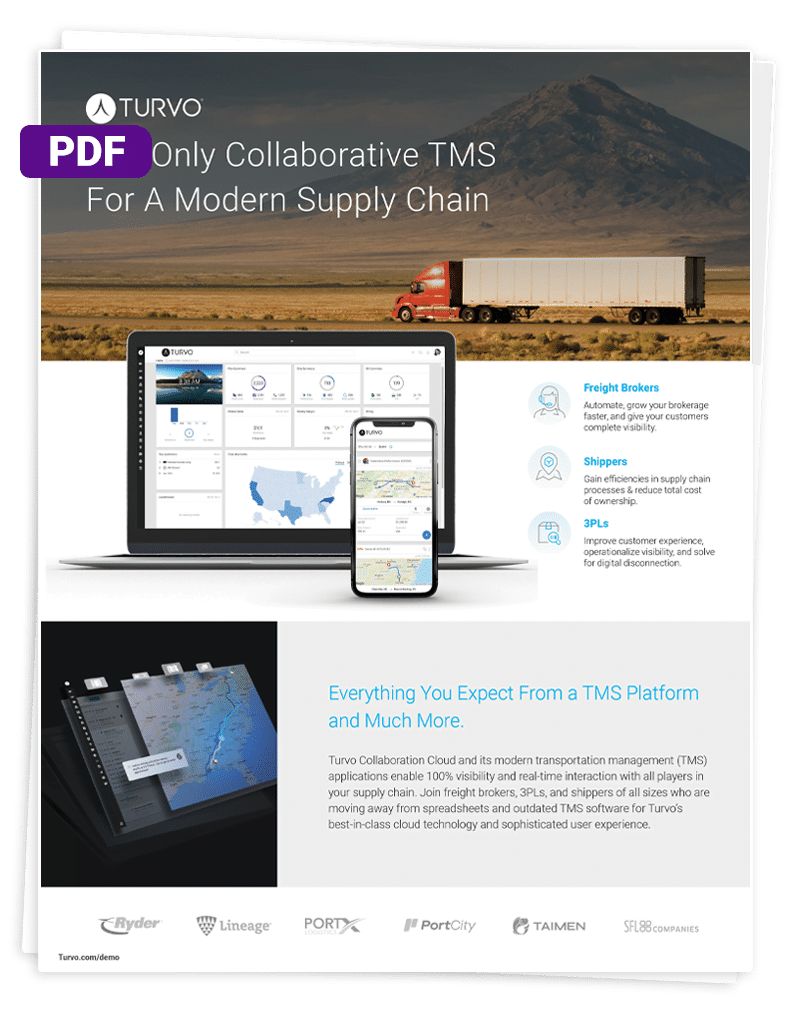
For freight brokers and 3PLs assessing how connected freight management can extend across their operation, the Turvo Overview shows how transportation workflows can connect with orders, inventory, shipments, and appointment scheduling.
2. Test the Freight Workflows That Consume the Most Time
A feature list does not show how much work remains for the people actually moving freight.
Identify the activities creating the most repetitive work, re-entry, delays, or exceptions. Then ask vendors to demonstrate realistic workflows such as receiving an order, building a shipment, finding capacity, updating a customer, managing a late delivery, collecting a POD, or moving completed freight toward settlement.
Watch where information has to be entered twice, where employees leave the system, and what happens when a shipment does not follow the ideal path.
The stronger system is the one that makes the freight lifecycle easier to carry forward without requiring employees to repeatedly reconstruct the order, shipment, carrier, customer, or document context.
3. Check How the System Fits Your Existing Freight Tech Stack
A freight management system is rarely the only technology in the operation.
Map the systems that need to exchange information with it, including accounting and ERP platforms, WMS software, load boards, tracking providers, telematics, carrier-vetting tools, payment systems, and customer technologies.
Go beyond asking whether an integration exists. Determine what information moves, whether updates can flow both ways where required, what needs custom development, and how another provider can be added later.
Turvo’s Integration Hub supports connections with accounting and ERP systems, warehouse platforms, load boards, tracking providers, and carrier technologies. Public APIs, pre-built integrations, webhooks, and data-import tools give freight businesses different ways to connect specialist applications around their transportation workflows.
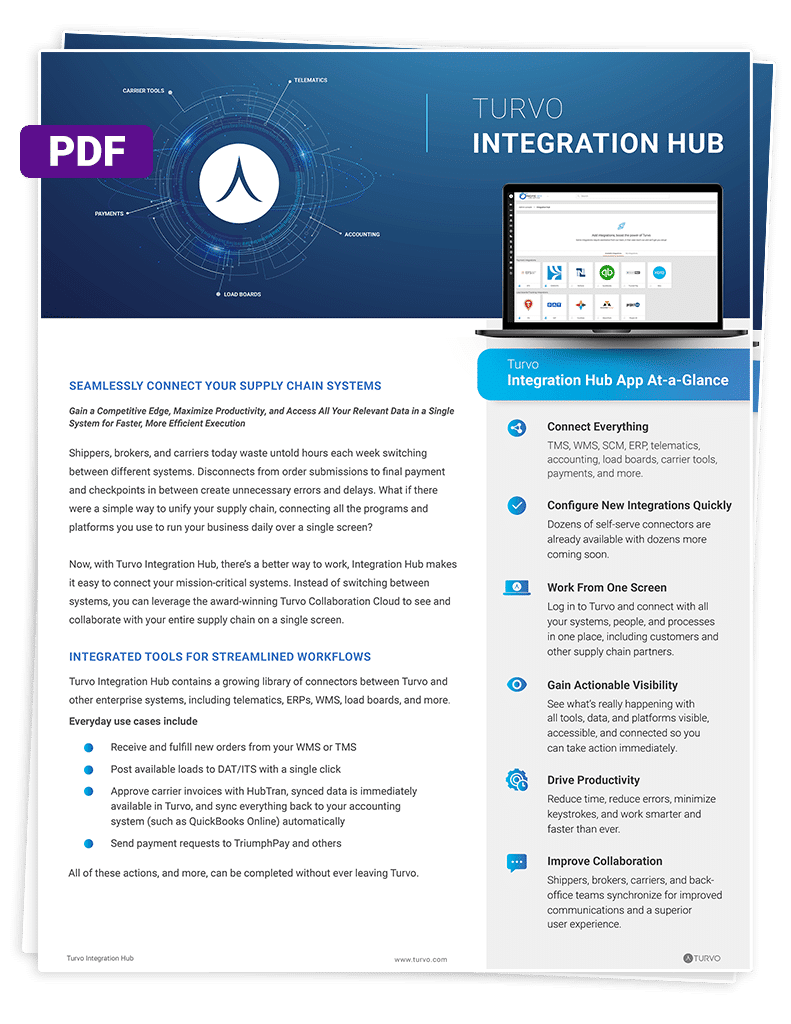
Download the Integration Hub Brief
4. Evaluate the Experience for Employees, Customers, and Carriers
Freight management involves more people than the employee operating the TMS.
Test how quickly employees can find a shipment, customer, carrier, document, message, appointment, or exception. Then examine the experience available to customers and transportation partners.
Look for relevant self-service visibility, contextual communication, document sharing, clear shipment statuses, and workflows that allow external participants to contribute without requiring an employee to relay every piece of information manually.
For brokers and 3PLs, this is particularly important because the freight-management experience can become part of the service offered to customers. Turvo, for example, connects customers and carriers to relevant shipment workflows while keeping messages, documents, and updates associated with the freight being managed.
5. Evaluate Migration, Implementation, and Ongoing Support
Replacing a freight management system affects more than software access. It can change active shipments, customer and carrier records, integrations, financial processes, permissions, reporting, and established operating habits.
Ask what data can be migrated, how existing workflows will be mapped, who owns each stage of implementation, what training is provided, and what support continues after go-live.
Turvo provides data migration, onboarding, training, and ongoing support to help brokers and 3PLs establish the operating environment around the technology rather than treating implementation as a one-time software handoff.
Build a More Connected Freight Operation as You Grow
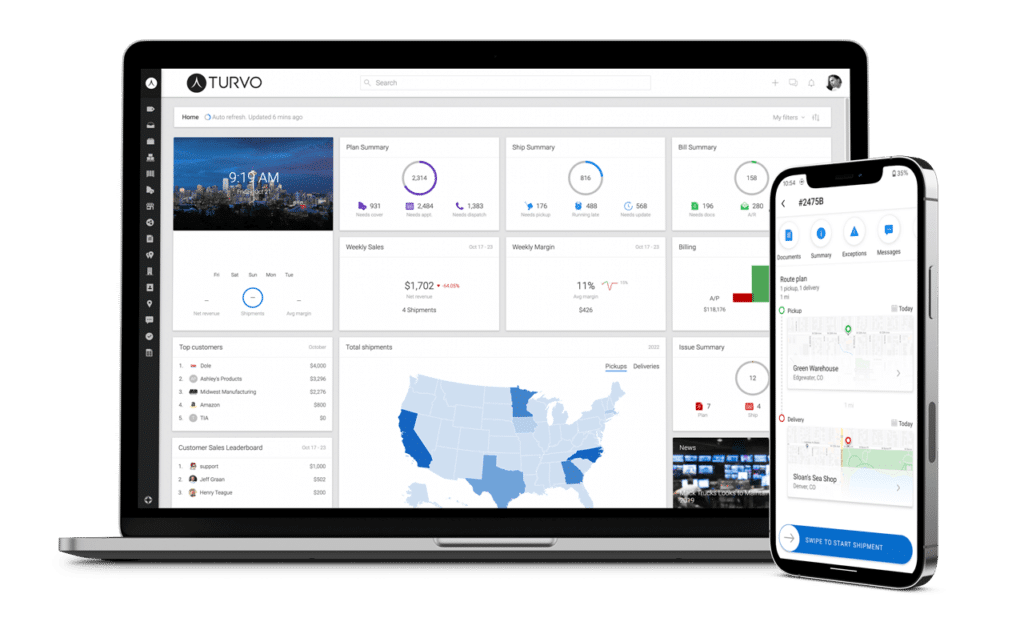
The right freight management system should make additional freight easier to manage rather than forcing your team to add the same level of manual work, disconnected tools, and administrative overhead as volume increases.
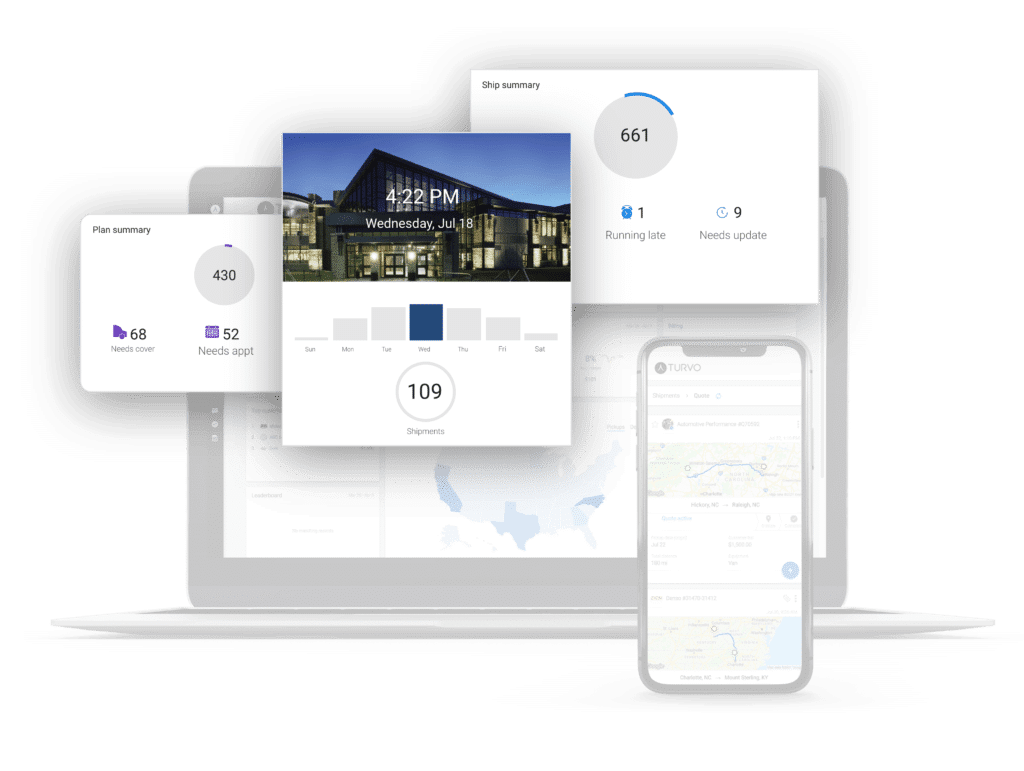
Turvo gives freight brokers and 3PLs a connected operating environment for planning, executing, tracking, and settling freight while keeping customers, carriers, documents, communication, and surrounding technology connected to those workflows.
Its collaboration layer and integration architecture help businesses build a freight ecosystem that can evolve without turning every new customer, partner, or technology into another manual handoff.
If your team wants to modernize freight operations while keeping the people and systems around each shipment better connected, request a Turvo demo to see how it fits your operation.
FAQs
1. What Is a Freight Management System?
A freight management system helps businesses plan, execute, track, document, and settle freight while coordinating carriers, customers, shipments, and related operational workflows.
2. What Is the Difference Between a Freight Management System and a TMS?
The terms often overlap. A TMS focuses on transportation planning and execution, while freight management software may also include broader carrier, customer, document, collaboration, and settlement workflows.
3. What Features Should a Freight Management System Have?
Look for shipment planning, carrier management, tracking, automation, document management, invoicing or settlement, analytics, customer visibility, integrations, and support for your required transportation modes.
4. How Does Freight Management Software Improve Shipment Visibility?
Freight management software provides real-time shipment tracking, automated status updates, and centralized access to transportation information. This helps brokers, 3PLs, and shippers monitor freight movements, identify delays earlier, and keep customers informed without relying on constant manual follow-ups.
5. Who Should Use Freight Management Software?
Freight brokers, 3PLs, carriers, shippers, and hybrid transportation businesses can benefit, particularly when growing shipment volumes make spreadsheets, disconnected systems, and manual coordination difficult to manage.