

Key Takeaways
- Turvo stands out for freight brokers and 3PLs whose supply chain challenges center on transportation execution and coordination, connecting orders, shipment activity, customers, carriers, documents, visibility, and surrounding logistics systems within a collaborative operating environment.
- Infios Transportation Management is better suited to complex multimodal supply chains, combining domestic and international transportation planning, optimization, visibility, automation, analytics, and connections with warehouse and order-management systems.
- McLeod Software fits transportation-heavy supply chains involving carrier, brokerage, or hybrid operations, with capabilities spanning load planning, dispatch, carrier management, accounting, automation, EDI, and transportation integrations.
- The right supply chain management software depends on which parts of the operation need to be connected, whether the priority is transportation, warehousing, orders, inventory, partner coordination, financial workflows, or broader end-to-end supply chain execution.
Choosing supply chain management software becomes expensive when the platform solves a different problem from the one holding your business back. Better inventory planning will not resolve repeated carrier follow-ups, just as shipment tracking alone will not fix purchasing or production delays.
Start with the result you need: lower operating costs, more dependable deliveries, or greater capacity to serve customers. Then identify the processes that must improve to achieve it.
This guide focuses on three solutions for supply chains where transportation is a central concern. We compare Turvo, Infios Transportation Management, and McLeod Software, explaining their strengths, limitations, and suitability for different operating models.
What is Supply Chain Management (SCM) Software?
Supply chain management (SCM) software is a technology solution that helps businesses plan, manage, and coordinate activities across their supply chain, from sourcing raw materials and managing inventory to production, transportation, and final delivery. It connects different supply chain processes and provides a centralized view of operations.
The software typically includes features such as demand forecasting, inventory management, procurement, order management, warehouse management, and transportation planning. These capabilities help businesses monitor supply chain performance, coordinate with suppliers and logistics partners, and identify potential disruptions before they affect operations.
By connecting data and workflows across departments and external partners, SCM software helps businesses reduce operational costs, improve inventory accuracy, minimize delays, and make more informed decisions. It also supports better collaboration and allows organizations to respond more efficiently to changing customer demands and supply chain conditions.
1. Turvo: Best for Connecting Transportation and Partner Collaboration
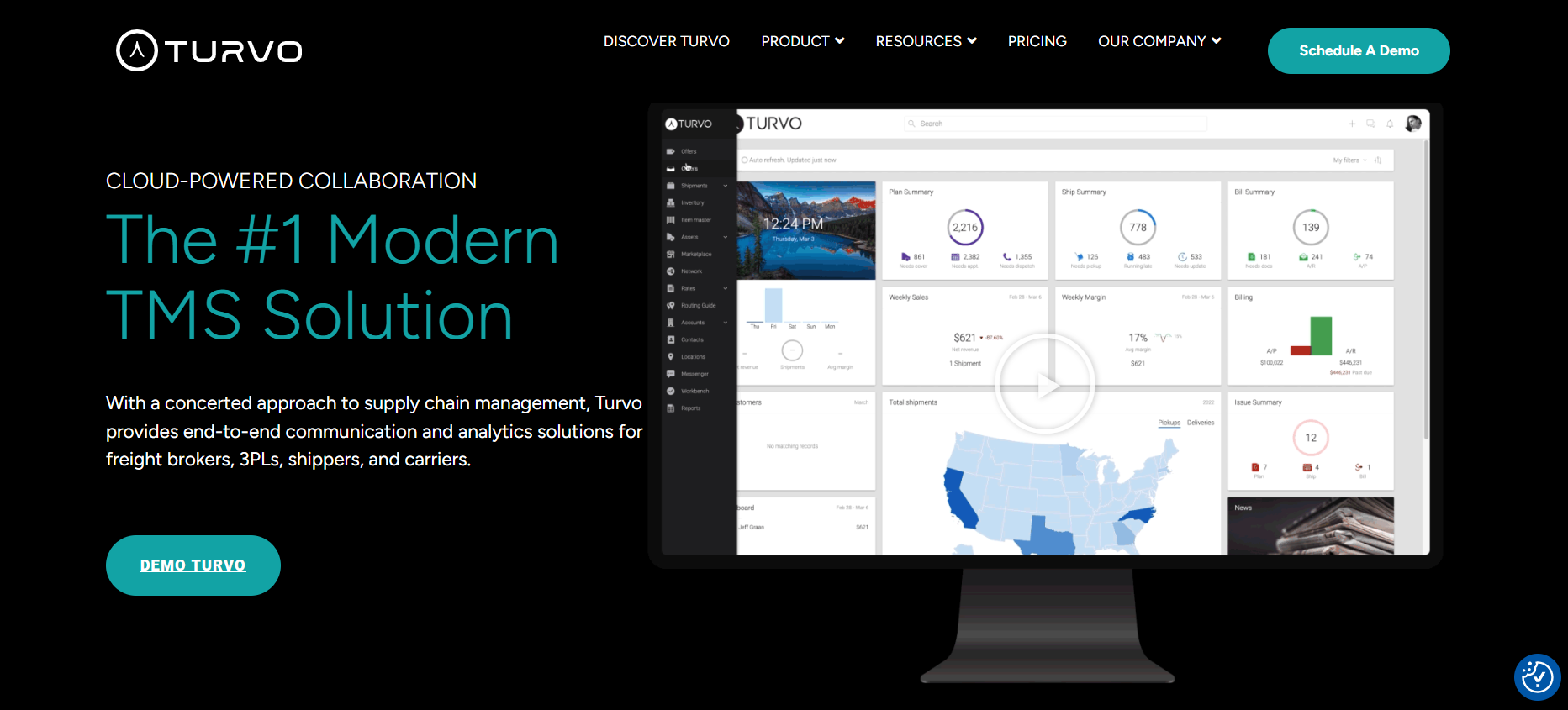
Turvo gives freight brokers and 3PLs a way to manage the connections between customer orders, transportation, warehouse information, and delivery. Its collaborative transportation management system organizes the work involved in moving freight while keeping customers, carriers, and internal teams connected to relevant information.
For a logistics provider, those connections shape the service it delivers. A customer order needs a transportation plan, the carrier needs clear shipment details, and the receiving facility needs to know when to expect the freight. Turvo helps these participants coordinate without requiring employees to carry every update between them.
The platform combines shipment execution with order planning, inventory and warehouse visibility, appointment scheduling, and analytics. Integrations bring information from WMS, ERP, and other logistics systems into the workflow.
Within a supply chain management software shortlist, Turvo is particularly relevant when the priority is managing logistics execution across multiple relationships. Its strongest fit is brokers and 3PLs seeking fewer manual handoffs, a more transparent customer experience, and room to grow their operations.
Key Capabilities and Benefits
1. Keep Logistics Work Moving Between Teams
Turvo connects the information employees need as a shipment moves from planning through delivery and settlement.
In a logistics business, several people may work on the same customer commitment. One employee prepares the load, another coordinates the carrier, and others manage customer questions or financial processing. Progress slows when each person must collect the details again before continuing.
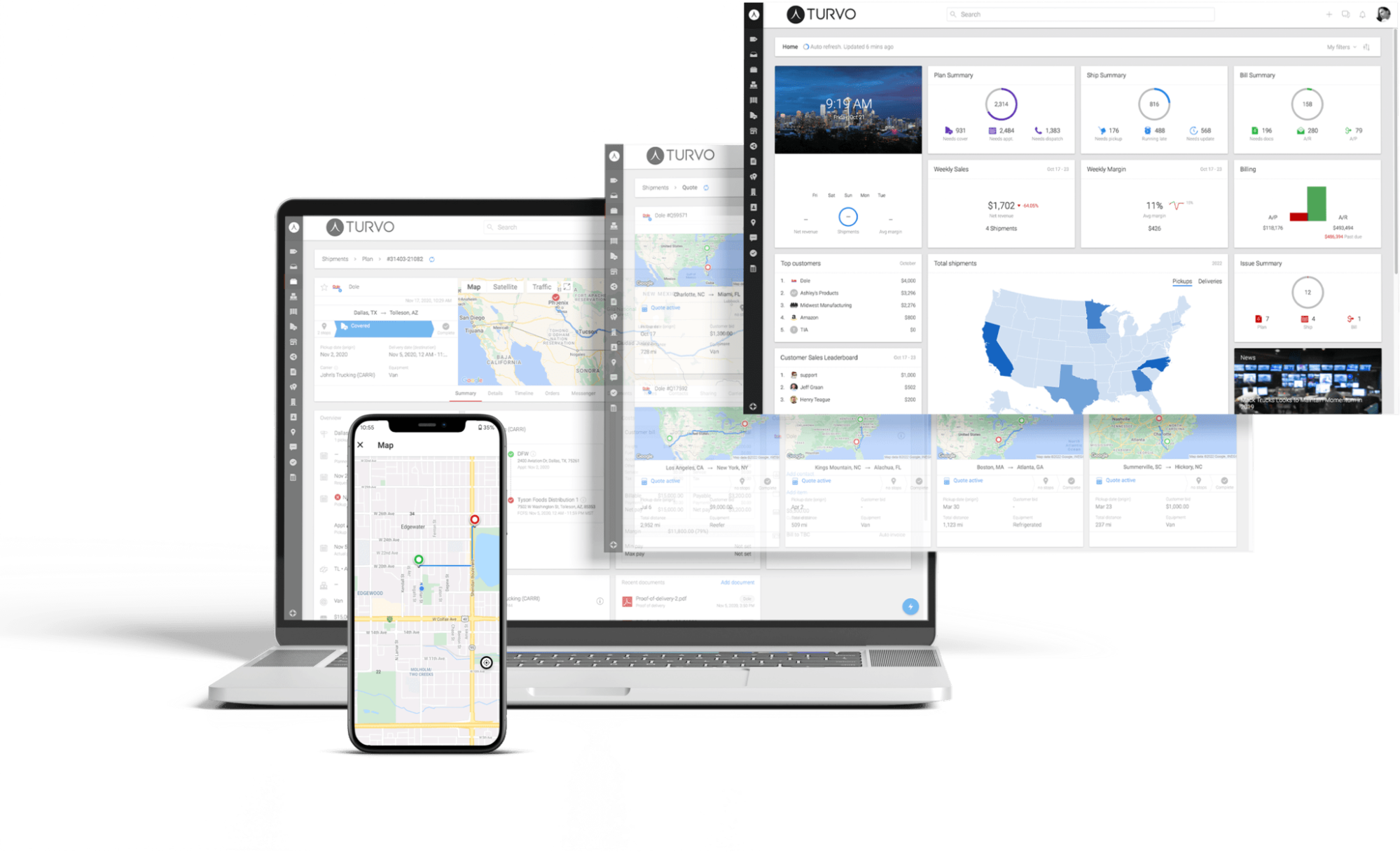
Turvo’s shipment execution tools keep tracking, documents, and contextual messages associated with the shipment. Teams can review the existing information as responsibility moves between functions.
For example, an account manager handling a delivery question can review the shipment’s activity without asking operations to assemble a separate summary.
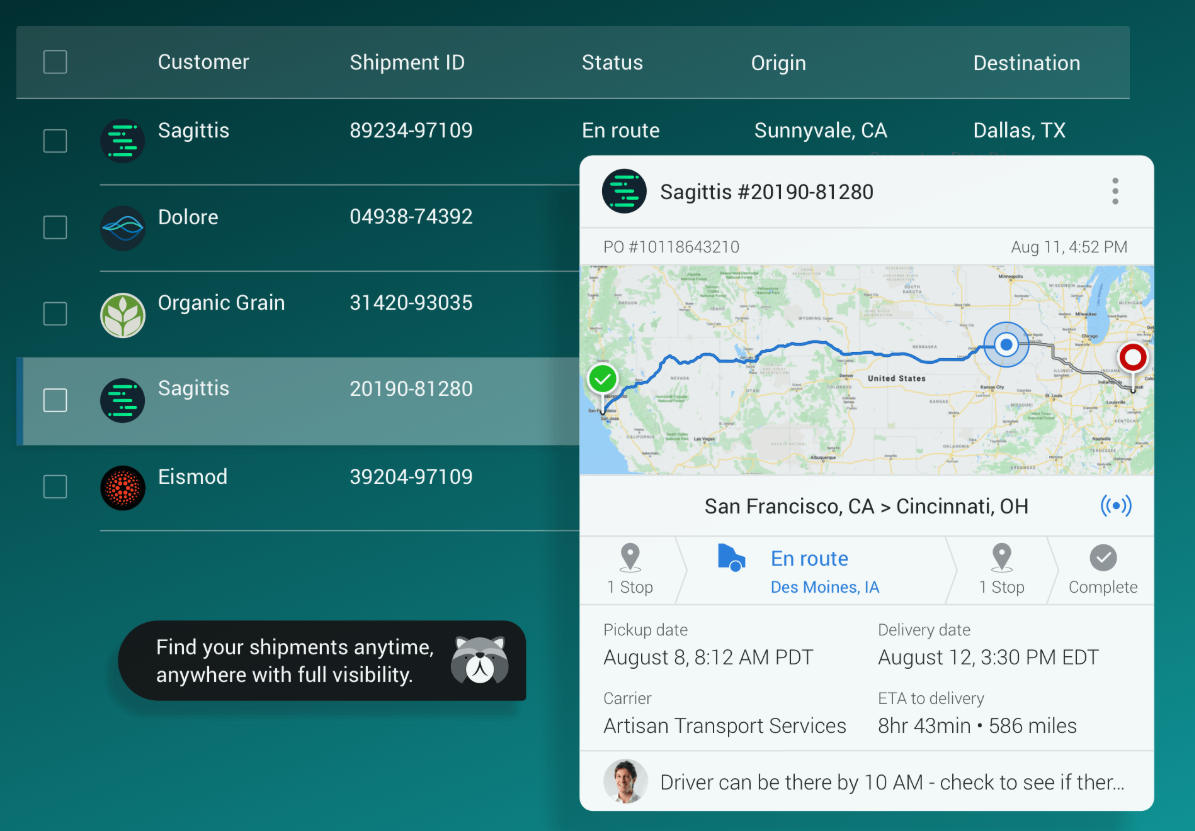
This continuity helps brokers and 3PLs handle a larger book of business with less internal coordination. Employees can put more attention into managing freight and customer relationships as routine information transfers become less demanding.
2. Bring Customers and Carriers Into the Same Conversation
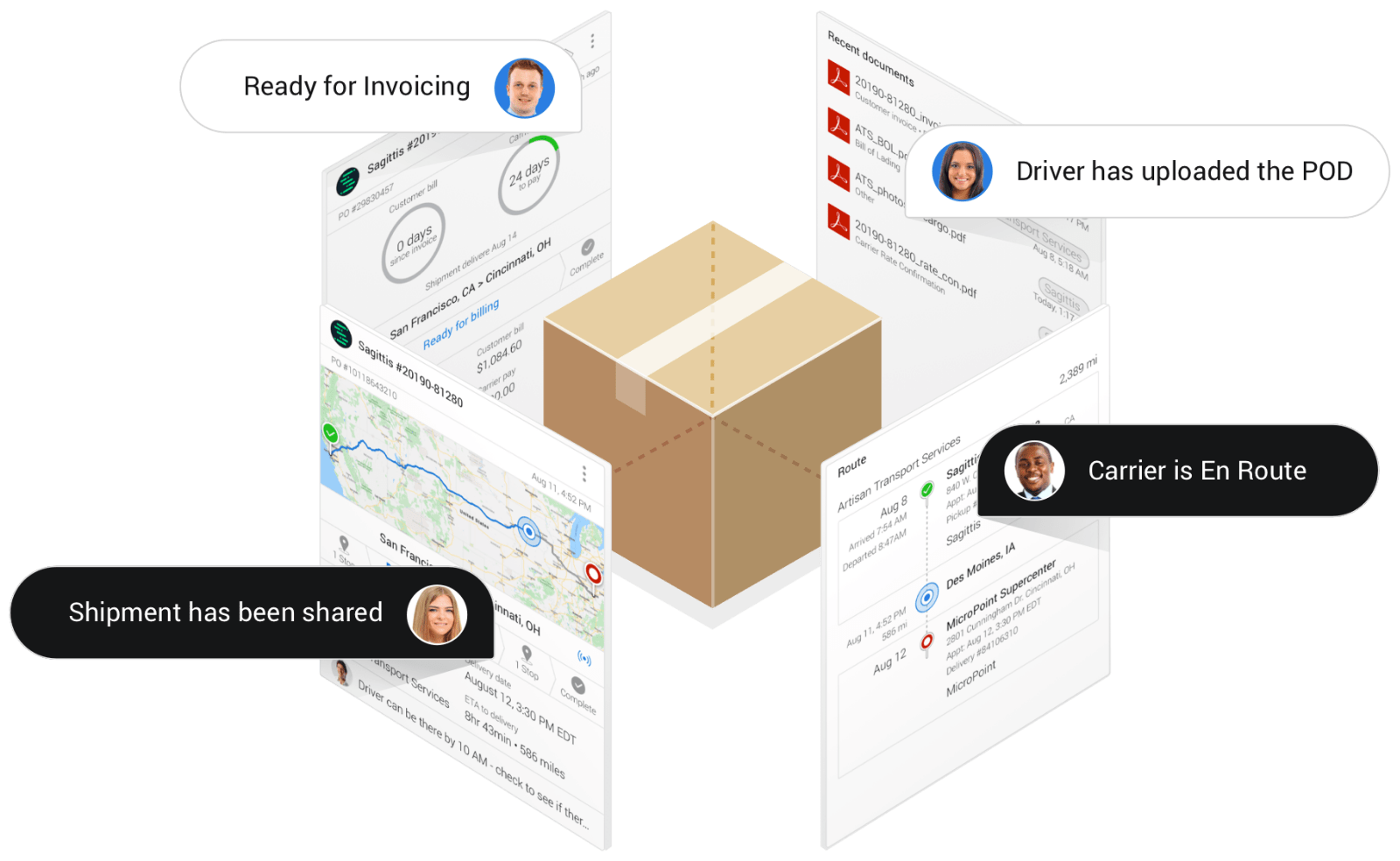
Turvo Collaboration Cloud lets logistics providers extend relevant shipment information to the businesses they work with.
Supply chain coordination often involves people who use different systems and have different responsibilities. A carrier confirms a change with operations, but the customer’s account manager may not see that conversation until someone forwards it.

Turvo supports shareable shipment links, contextual messaging, document sharing, and notifications. Customers and carriers can participate around the shipment, giving conversations a common reference.
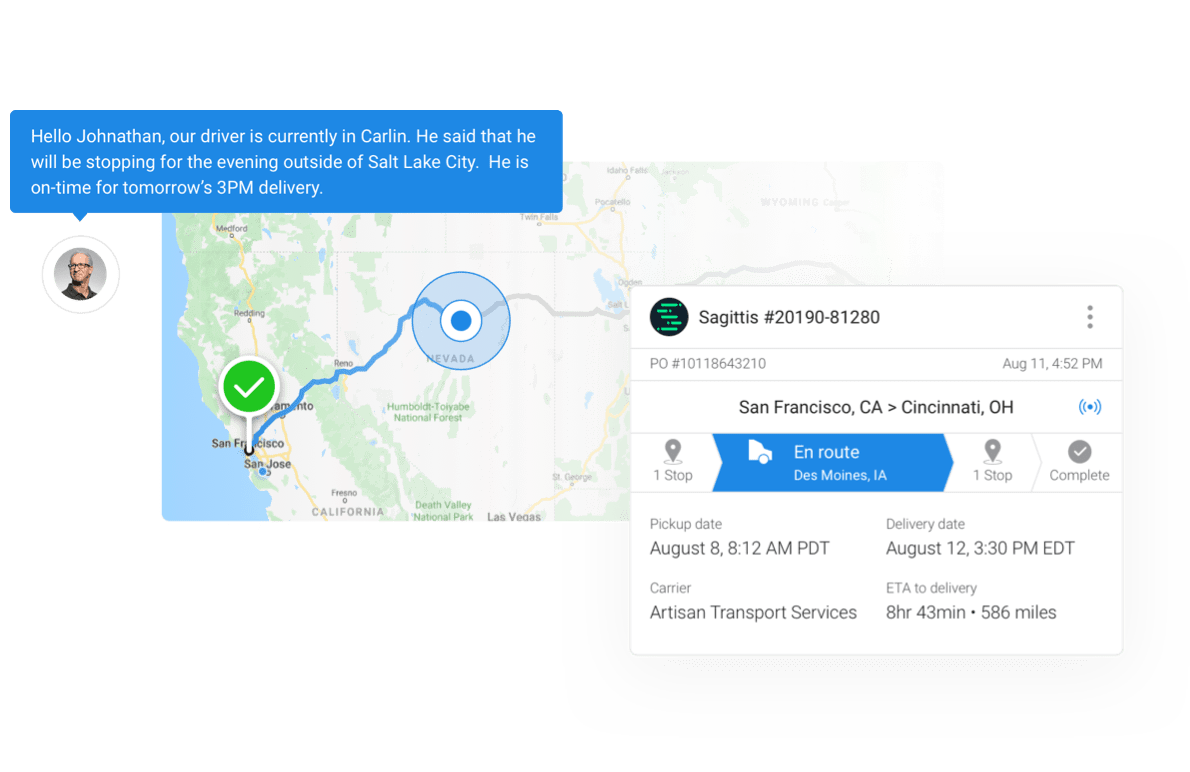
When a delivery plan changes, the logistics provider can coordinate the response using the available shipment information. Customers also have more direct access to routine updates.
For brokers and 3PLs, this makes collaboration part of the service they provide. It reduces dependence on employees relaying information between separate conversations and helps partners work with a clearer understanding of the shipment.
3. Connect Existing Supply Chain Systems to Daily Operations
The Turvo Integration Hub helps logistics providers bring information from their existing applications into transportation workflows.
A 3PL may already rely on warehouse software for stock records, an ERP for business transactions, and specialist providers for tracking or carrier monitoring. Connecting those systems matters because employees need their information at different stages of the same customer order.
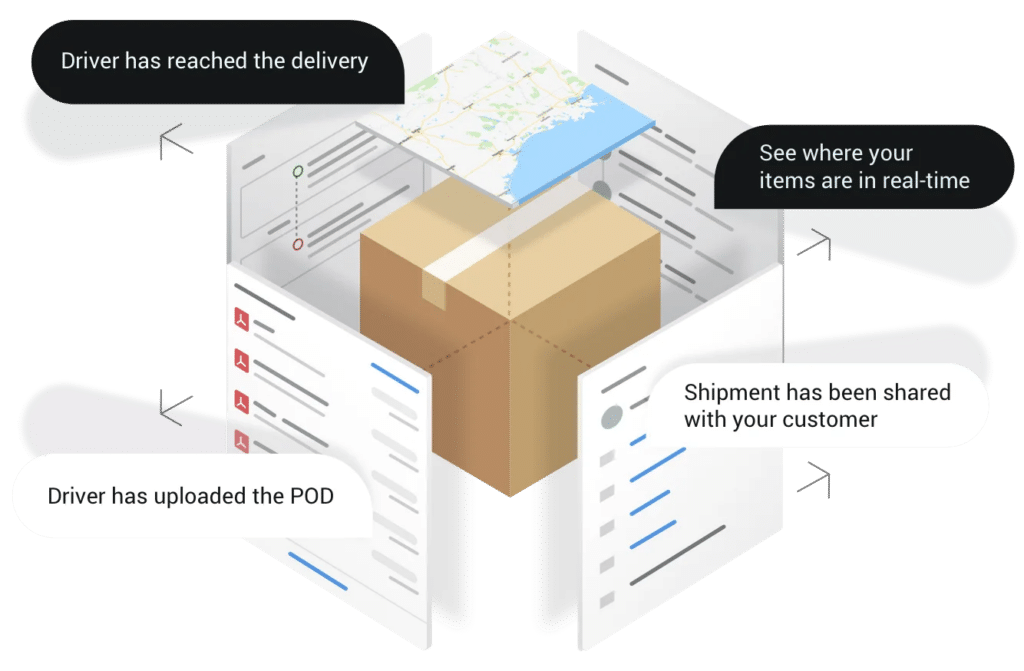
Turvo offers pre-built integrations, public APIs, webhooks, and data-import tools. Its integration categories include WMS, ERP and accounting, transportation visibility, telematics, load boards, and carrier monitoring.
These connections can reduce the manual effort involved in moving information between applications. Order details can support shipment planning, while operational records can inform downstream financial processing.
The business can retain specialist systems and develop a more connected logistics workflow around them. This is especially useful when new customer requirements would otherwise create another spreadsheet or manual transfer.
4. Understand How Shipment Disruptions Affect Customer Commitments
Turvo helps teams assess transportation problems alongside the orders, facilities, and conversations affected by them.
A delayed truck can create several decisions. The receiving appointment may need to change, the customer may need a revised expectation, and the carrier may need new instructions. Responding requires a clear view of the movement and its surrounding commitments.
Turvo’s visibility capabilities bring inbound and outbound shipment information together with order, inventory, facility, and communication context. Driver App and telematics information can contribute location and status updates from the road.
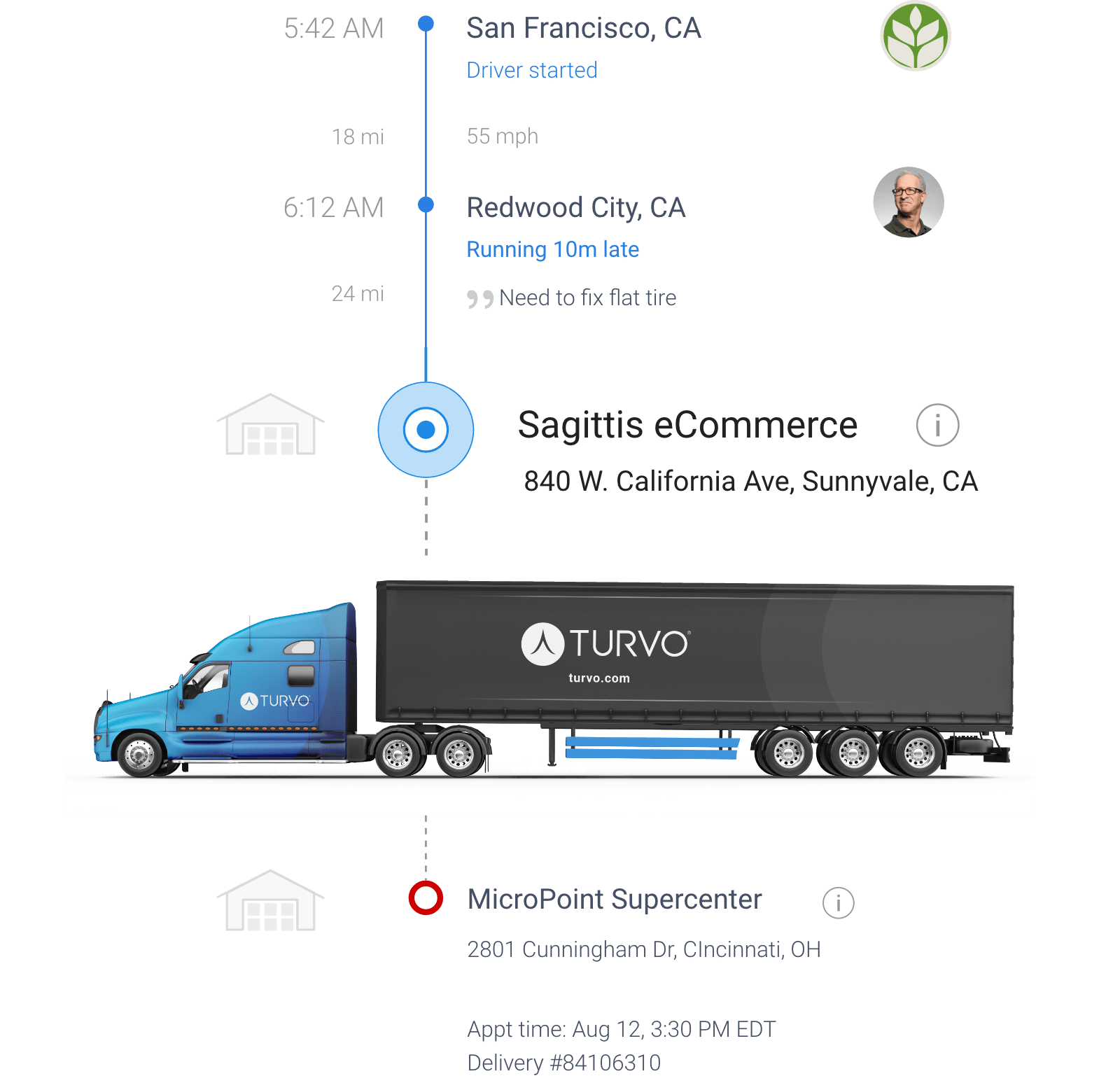
Employees can use that information to investigate the disruption and coordinate with the relevant participants.
For logistics providers, the benefit is a more informed response when service is at risk. Teams spend less time establishing what happened before deciding how to keep the customer’s freight moving.
5. Evaluate Service and Profitability Across Logistics Relationships
Turvo Analytics helps businesses review the performance of the customers, carriers, and lanes they manage.
A supply chain management platform needs to support decisions beyond the next shipment. Managers also need to understand which relationships are performing well, where service is inconsistent, and whether additional volume is contributing to profitability.
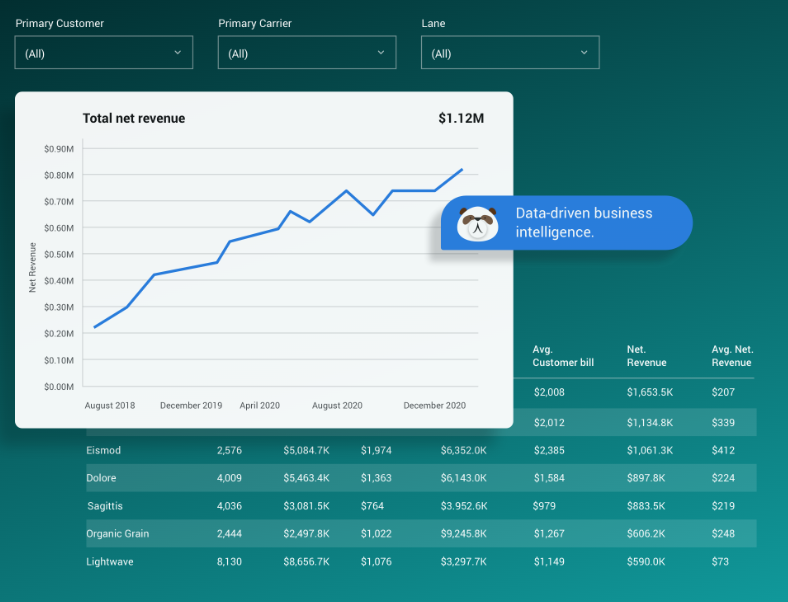
Turvo provides customizable dashboards, reports, and scorecards covering operational and financial information. Teams can examine performance trends and use the findings in customer and internal business reviews.
An account manager can prepare a discussion about recurring delivery issues, while an operations leader investigates the carrier or lane involved. Finance and leadership can review the commercial performance of that freight.
These views help logistics providers make decisions using evidence from daily execution. They also support more specific customer conversations about service improvements and future requirements.
6. Align Facility Activity With Transportation Plans
Turvo Appointment Scheduling connects pickup and delivery bookings with the freight being handled.
Warehouses, carriers, and transportation teams need to work from compatible plans. If appointment information is managed separately from shipment progress, a change on the road can leave the receiving facility preparing for an arrival that will no longer happen as expected.
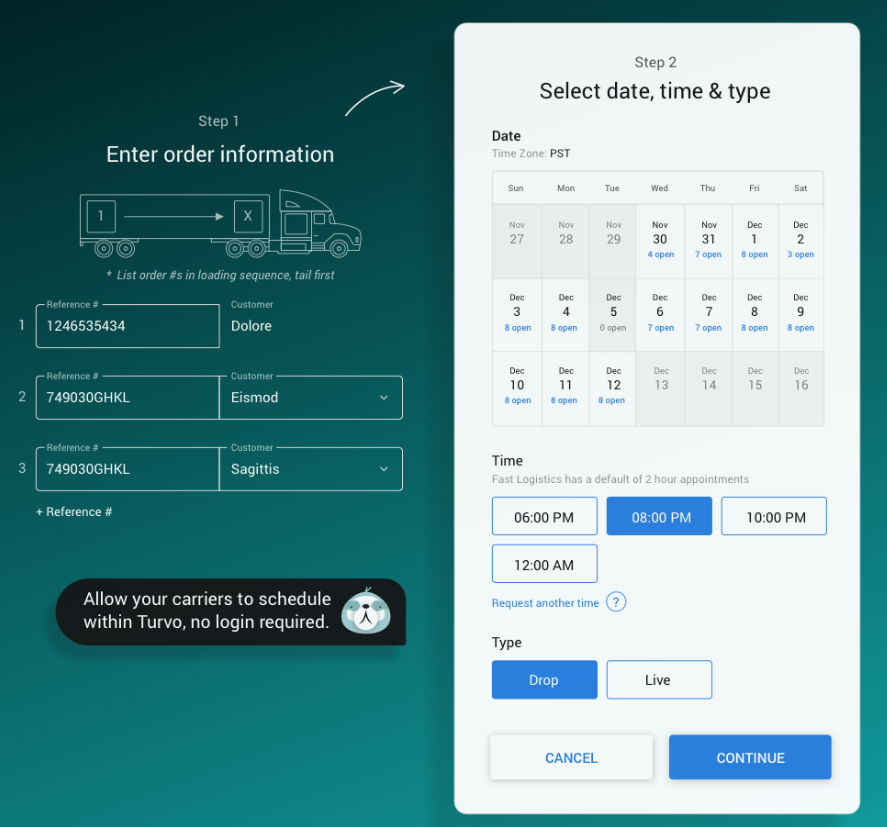
Turvo associates appointment slots with order, shipment, customer, and carrier information. Self-service booking allows partners to participate directly, while truck-status and arrival and departure updates help teams follow facility activity.
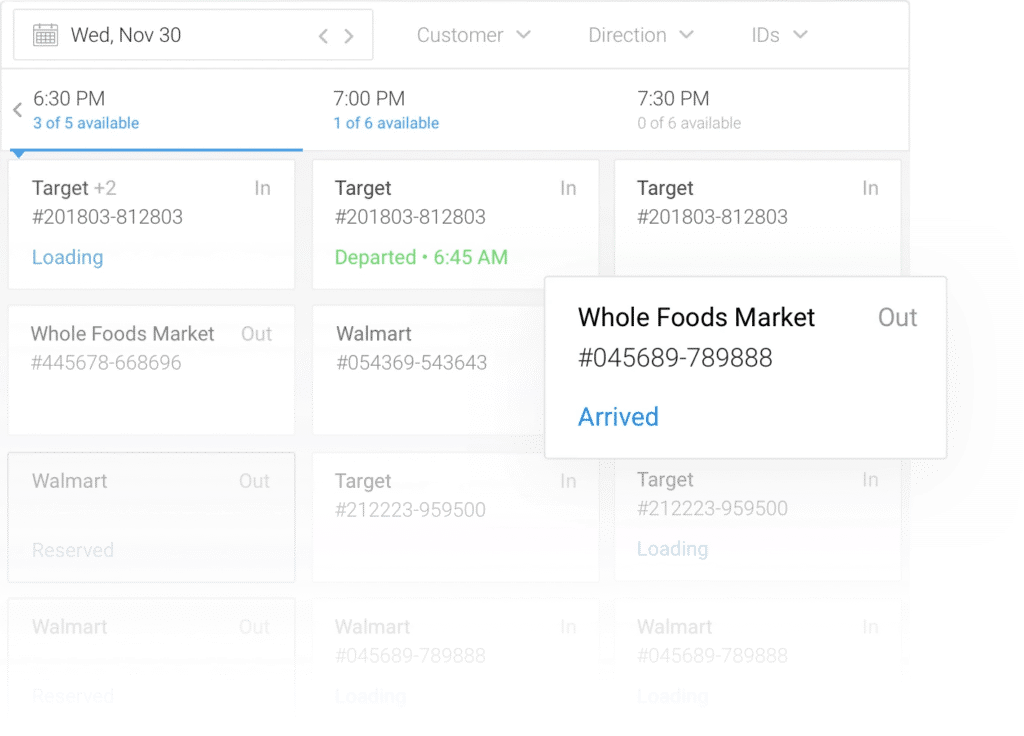
When timing changes, employees can review the shipment and its appointment together before coordinating an adjustment.
For 3PLs managing freight across multiple locations, this brings facility coordination into the broader logistics workflow and reduces the calls and messages required to keep schedules aligned.
7. Plan Shipments With Order and Inventory Context
Turvo connects customer order requirements with the transportation needed to fulfill them.
Its order-to-shipment planning supports building one or multiple orders into shipments with routes, dimensions, capacity requirements, cost allocations, and margins. Linked shipments also support orders that move through multiple legs, with separate carrier assignments and workflows for each movement.
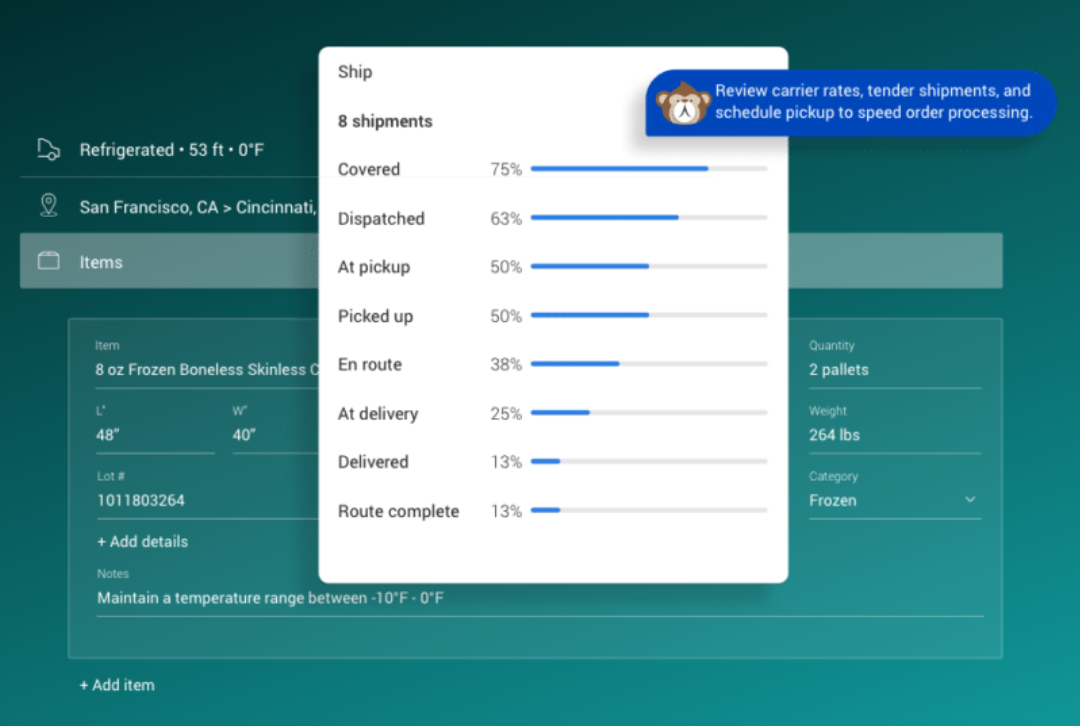
For logistics providers offering warehouse services, Turvo’s inventory visibility adds information from connected systems. Teams can review quantities and inventory status by facility, lot, and SKU, with alerts for expiring lots.
That context helps employees relate transportation plans to the goods available and the orders being served. A customer discussion can address both stock information and the shipments involved in fulfillment.
For 3PLs, the value is a closer connection between warehouse information, customer requirements, and transportation execution.
8. Preserve Delivery Information for Customer Service and Settlement
The Turvo Driver App helps capture shipment updates and supporting documents during execution.
The information collected at delivery serves several purposes. Customers may need confirmation, operations needs to close out the movement, and finance needs the appropriate paperwork before progressing with billing or payment.

Drivers can provide status updates, communicate within the shipment context, and upload documents. Turvo’s brokerage workflows support documents such as bills of lading and proof of delivery.
Keeping those records associated with the shipment helps employees find the evidence needed for their next task. Settlement workflows and accounting integrations support the continuation into financial processing.
For brokers and 3PLs, this reduces the document chasing that can persist after the physical delivery is complete. Information captured on the road continues to support the customer relationship and the back office.
Turvo Pricing
Turvo offers transparent pricing, with its TMS plan starting at $5,000 per month and Enterprise pricing available upon request. Both options include onboarding, training, data migration, and support resources.
Where Turvo Shines
- A practical logistics focus for brokers and 3PLs: Turvo connects the activities involved in planning, moving, monitoring, and settling freight. Its value is closely tied to the daily work of serving shipper customers.
- Collaboration across business boundaries: Customers and carriers can participate in relevant shipment workflows. Shared information helps reduce the manual coordination between separate organizations.
- Connections between transportation and warehouse information: Order planning, inventory visibility, and appointment scheduling help 3PLs coordinate related services around customer requirements.
- Flexibility within an existing software environment: Integrations and APIs support connections to warehouse, ERP, accounting, tracking, and carrier tools. Businesses can retain specialist applications while improving information flow.
- Support for adoption and ongoing operations: Migration assistance, onboarding, training, hypercare, and learning resources help teams establish workable processes around the platform.
Turvo Customer Reviews
Kimo Y., Director of Information Technology, said, “With a single click, we can invite anyone we want onto the platform for all of us to collaborate and view shipments and documents. Turvo has made our supply chain visibility dreams come true.”
Trevor H., Carrier Sales Representative, said, “The system has a very intuitive UI/UX for easy navigation with minimal clicks. You can tell that a lot of thought and effort has gone into the system’s design, and we love it.”
Chris Wang, CEO, Taimen Transport LLC, said, “Trust is really the most important factor. Turvo is trust manifest.”
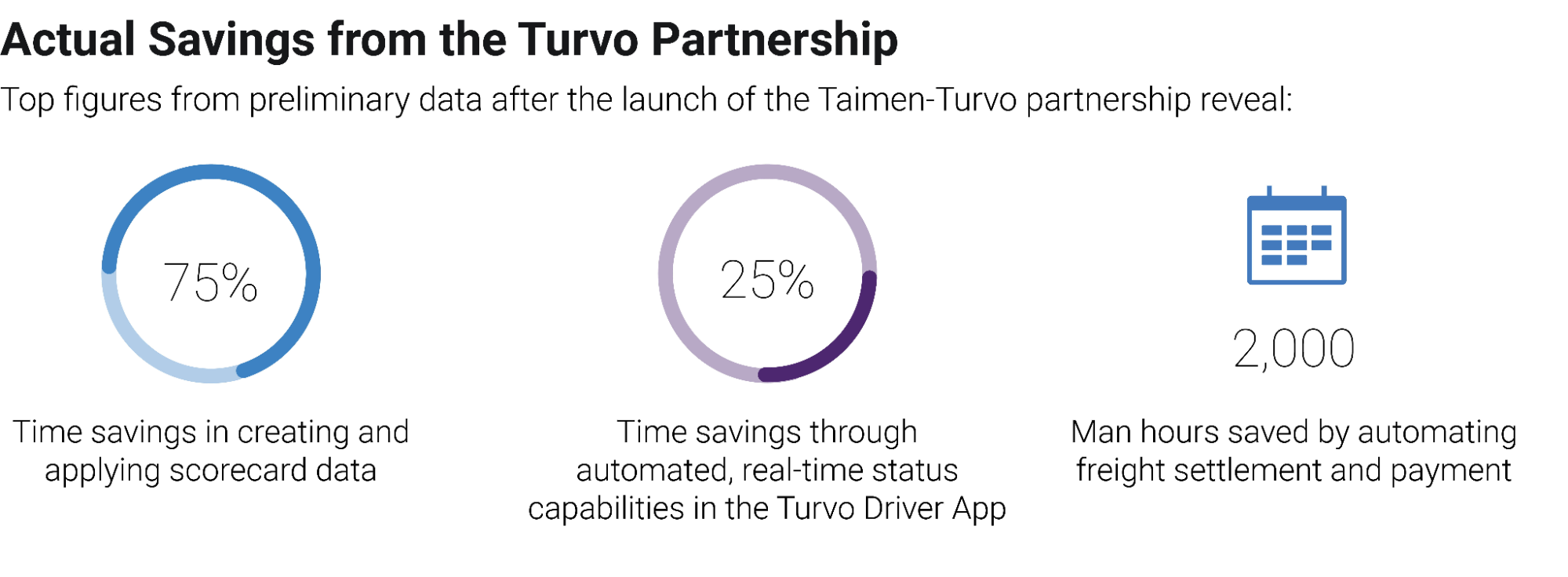
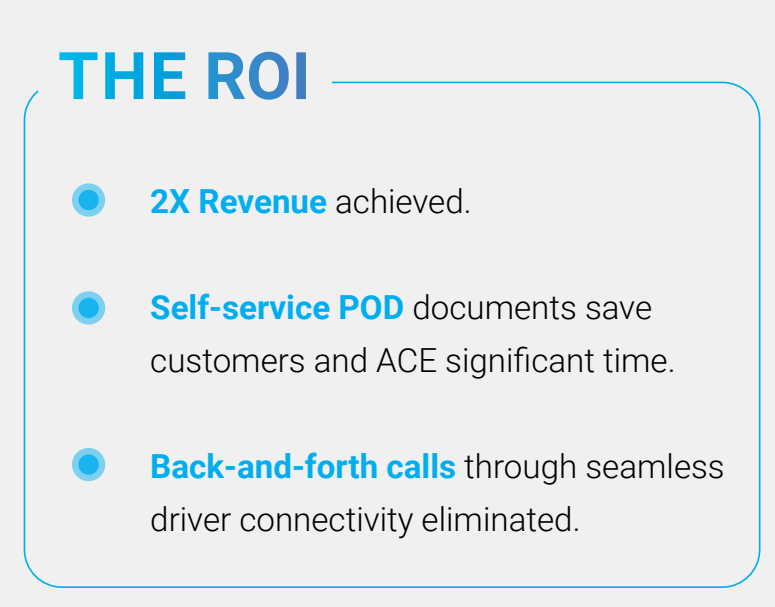
Chris Babcock, ACE Forwarding, said, “Turvo greatly assisted with the growth of our brokerage during ACE Forwarding’s second year of business. During that period, Turvo more than doubled our revenue.”
Who Turvo Is Best For
- 3PLs connecting transportation with warehouse services: Providers can bring order, inventory, appointment, and shipment information closer together to coordinate customer fulfillment.
- Freight brokers improving coordination across their network: Teams can connect carrier activity, customer communication, documents, and settlement around the shipments they manage.
- Established logistics providers modernizing fragmented operations: Businesses using separate portals, spreadsheets, and message threads can evaluate Turvo as a shared environment for daily execution.
- Growing teams seeking a more consistent customer experience: Providers can offer relevant shipment access and connected communication as their customer base expands.
- Organizations retaining specialist supply chain applications: Teams with existing WMS, ERP, accounting, and tracking systems can assess Turvo as the transportation and collaboration platform linking those tools.
See how Turvo connects the logistics work behind your customer commitments. Bring an order, its warehouse and transportation requirements, and the delivery handoff to a demo to evaluate the complete process. Book a demo now.
2. Infios Transportation Management (Formerly MercuryGate): Best for Complex Multimodal Supply Chain Operations
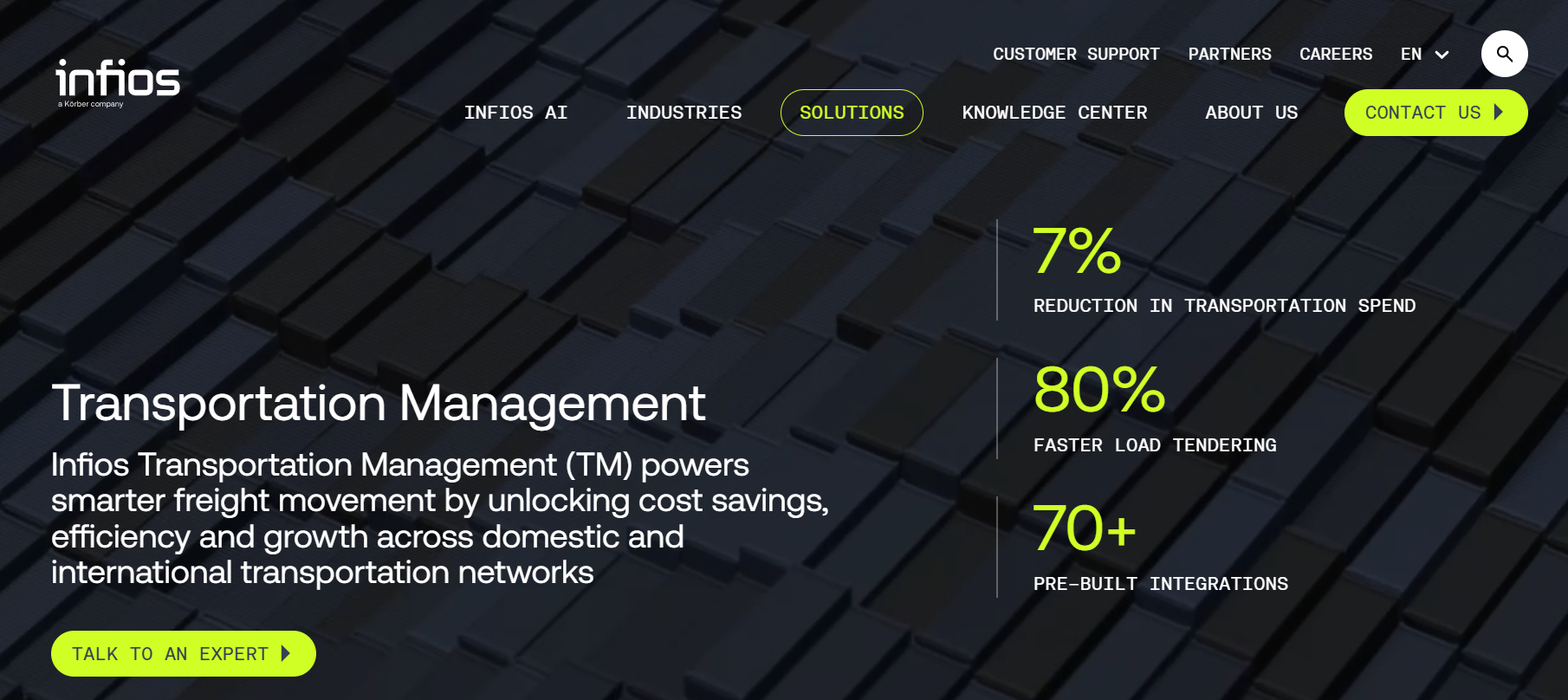
Infios Transportation Management (TM) is an enterprise transportation management system designed to help organizations plan, execute, and optimize freight movements across complex supply chain networks. Formerly MercuryGate TMS, the platform supports domestic and international transportation across multiple modes, currencies, and geographies, making it relevant to manufacturers, retailers, distributors, and 3PLs managing substantial logistics operations.
Infios TM combines multimodal transportation planning, automated freight execution, shipment visibility, analytics, and AI-assisted decision-making. It also connects with Infios’ separate Order Management and Warehouse Management solutions, allowing organizations to coordinate transportation activities with fulfillment and warehouse operations as part of a broader supply chain execution environment.
Key Capabilities and Benefits
- Multimodal transportation planning: Supports freight planning across truckload, LTL, parcel, ocean, air, rail, and other transportation modes, helping organizations coordinate domestic and international shipments within a centralized environment.
- Advanced freight optimization: Uses automated rating, carrier selection, shipment consolidation, and route optimization to evaluate transportation options based on costs, service requirements, capacity, and operational constraints.
- AI-powered workflow automation: Combines predictive, generative, conversational, and agentic AI to identify transportation risks, automate document processing, support order creation, and recommend or execute responses to disruptions.
- End-to-end shipment visibility: Provides transportation status information, exception monitoring, and operational insights to help teams track freight movements, coordinate carrier activities, and respond to potential delivery delays.
- Enterprise integration and analytics: Connects with ERP, warehouse management, order management, and other logistics technologies through APIs, EDI, and prebuilt integrations while providing transportation KPIs and performance reporting.
Pricing
Infios does not publicly disclose standard pricing for its Transportation Management platform. Custom quotes depend on the selected capabilities, transportation network, and integration requirements.
Where Infios Transportation Management Shines
- Global multimodal operations: Supports transportation planning and execution across multiple countries, currencies, and freight modes, making it suitable for businesses managing complex international supply chains.
- Enterprise transportation optimization: Advanced rating, carrier selection, shipment consolidation, and routing capabilities help organizations improve freight decisions while balancing transportation costs and service levels.
- Connected supply chain execution: Infios TM can work alongside the company’s separate order management and warehouse management solutions, allowing organizations to coordinate transportation with inventory availability, fulfillment priorities, and warehouse capacity.
- Scalable automation and AI: Its configurable architecture supports complex transportation networks, while AI-assisted workflows can reduce repetitive tasks, identify disruptions, and accelerate operational decision-making.
Where Infios Transportation Management Falls Short
- Broader solution requirements: Infios TM focuses on transportation management. Organizations requiring comprehensive warehouse management, order orchestration, or inventory planning need additional solutions rather than relying on the TMS alone.
- Implementation complexity: Configuring multiple transportation modes, international operations, enterprise integrations, and automated workflows may require substantial technical resources and implementation planning.
- Reporting and support concerns: Some customers report difficulties with Mercury Edge reporting, system performance, and inconsistent technical support, particularly when resolving complex operational issues.
Customer Reviews
A VP of Sales at a transportation company wrote, “Overall our experience with the Infios TMS has been very positive. The platform is stable and delivers a consistently reliable operational environment.”
A Supply Chain Associate at a manufacturing company wrote, “It is extremely slow, and the reporting is awful. The user interface could be way simpler.”
Who Infios Transportation Management Is Best For
- Global manufacturers: Businesses coordinating complex inbound and outbound transportation across production facilities, distribution centers, and international markets.
- Large retailers and distributors: Organizations seeking more efficient freight planning, carrier selection, shipment execution, and transportation cost control.
- Enterprise 3PLs: Logistics providers managing multiple customers, transportation modes, carrier networks, and operational requirements.
- Integrated supply chain teams: Organizations wanting transportation management to connect with enterprise resource planning, order management, warehouse operations, and analytics systems.
3. McLeod Software: Best for Integrated Carrier and Brokerage Supply Chain Operations

McLeod Software provides transportation operations and enterprise management solutions for trucking companies, freight brokerages, logistics providers, and private fleets. Its core products include LoadMaster for asset-based carriers and PowerBroker for freight brokerage operations. Businesses managing both carrier and brokerage activities can use the products separately or together to coordinate transportation operations.
McLeod focuses on the transportation execution side of supply chain management, connecting load planning, fleet dispatching, carrier coordination, shipment tracking, accounting, and workflow automation. Its transportation-specific capabilities and integration ecosystem make it particularly relevant to logistics businesses seeking to reduce manual coordination, improve fleet utilization, and manage transportation operations alongside financial processes.
Key Capabilities and Benefits
- Load planning and dispatch management: LoadMaster supports load assignments, driver scheduling, equipment management, route monitoring, and dispatch operations to help carriers coordinate freight movements and improve transportation resource utilization.
- Freight brokerage and carrier management: PowerBroker provides carrier selection, load matching, freight tendering, shipment tracking, and carrier communication capabilities for organizations managing outsourced transportation.
- Transportation accounting and financial management: Includes integrated general ledger, accounts receivable, accounts payable, billing, settlements, and transportation-specific financial reporting to connect operational and financial workflows.
- EDI and supply chain partner connectivity: McLeod’s native EDI engine and API integrations support electronic information exchange with shippers, carriers, brokers, customers, and other transportation technology partners.
- Workflow automation and operational analytics: FlowLogix automation, reporting, and connected transportation systems help teams streamline repetitive tasks, monitor operational activity, and make more informed decisions.
Pricing
McLeod does not publicly disclose standard pricing for LoadMaster, PowerBroker, or its other transportation management products. Custom quotes depend on the selected solutions, deployment environment, and operational requirements.
Where McLeod Software Shines
- Integrated carrier and brokerage operations: McLeod supports both asset-based transportation and freight brokerage activities, making it suitable for logistics businesses managing their own fleets alongside outsourced carrier networks.
- Transportation-specific financial management: Native accounting, billing, settlement, and reporting capabilities help organizations coordinate freight execution with financial operations rather than relying entirely on separate back-office systems.
- Extensive technology integrations: McLeod connects with telematics providers, shipment visibility platforms, load boards, payment tools, carrier management systems, and other specialized transportation technologies.
- Operational automation and deployment flexibility: Its configurable workflows, EDI engine, and deployment options help transportation providers connect existing systems, reduce manual coordination, and adapt processes to business requirements.
Where McLeod Software Falls Short
- Limited end-to-end supply chain coverage: McLeod primarily serves transportation providers rather than offering comprehensive warehouse management, demand forecasting, manufacturing planning, or supplier procurement functionality.
- Interface and usability: Some LoadMaster customers report that the interface feels outdated and that employees may require substantial training to navigate the platform’s extensive features.
- Implementation and integration requirements: Businesses using multiple McLeod products, custom workflows, third-party integrations, and financial processes may need additional technical support and configuration resources.
Customer Reviews
Breno O., a Broker, said, “My overall experience has been positive. I basically do everything I need in the same system.”
Dakotah C., a Dispatcher and Driver Manager, wrote, “Every tab you pull up stays in the background. Sometimes it can slow down the program.”
Who McLeod Software Is Best For
- Trucking companies and private fleets: Businesses managing load planning, driver assignments, equipment availability, dispatching, and transportation accounting.
- Freight brokerages: Organizations coordinating carrier relationships, load tendering, shipment tracking, brokerage execution, and financial settlement.
- Hybrid carrier-broker operations: Logistics businesses operating both asset-based fleets and brokerage services that want more connected transportation workflows.
- Integration-heavy logistics providers: Companies relying on telematics, EDI, visibility platforms, financial systems, and other specialized transportation technologies.
How We Ranked the Best Supply Chain Management Software
We evaluated each platform based on how effectively it supports connected supply chain operations while matching the needs of its target users.
- Operational coverage: Support across transportation, orders, inventory, warehousing, fulfillment, and related workflows.
- Integration capabilities: Connections with ERP, WMS, TMS, accounting, visibility, carrier, and other business systems.
- Automation: Ability to reduce repetitive work across planning, execution, alerts, documents, and operational handoffs.
- Visibility and analytics: Access to supply chain status, exceptions, performance data, and decision-support information.
- Partner coordination: Support for information exchange between internal teams, customers, carriers, suppliers, and other partners.
- Scalability: Ability to support additional users, locations, transactions, transportation modes, and operational complexity.
- Implementation fit: Configuration, integration, deployment, training, and organizational effort required to adopt the software.
How to Choose Supply Chain Management Software
The right supply chain management software should solve the operational gaps that matter most to your business without adding unnecessary complexity. Start with the workflows, systems, and participants that need to stay connected, then evaluate how effectively each platform supports them.
1. Define Which Supply Chain Processes Need to Be Connected
Supply chain management can cover transportation, warehousing, inventory, order fulfillment, procurement, supplier coordination, and financial workflows.
Start by identifying where information currently breaks down between these processes.
For example, order information may not reach transportation teams quickly enough, warehouse availability may be disconnected from shipment planning, or customer service may struggle to see what is happening after an order leaves the facility.
Prioritize the workflows creating the greatest delays, manual work, or service problems. That gives you a much clearer basis for comparing software than trying to buy the broadest platform available.
2. Test How Information Moves From Planning Through Execution
Supply chain software should help work progress rather than creating another place to store information.
During demonstrations, follow representative transactions from initial demand or order creation through fulfillment, transportation, delivery, and any related financial handoffs.
Look for points where users must re-enter information, switch systems, send manual updates, or reconstruct what happened earlier in the process.
The stronger platform should preserve useful context as responsibility passes between teams and make it clear what needs to happen next.
3. Check Whether the Platform Can Work With Your Existing Technology
Most organizations already rely on several specialized supply chain systems.
Map the applications that need to exchange data with the new platform, including ERP, WMS, accounting, transportation, visibility, telematics, order-management, and other operational systems.
Then determine what information must move between them, how frequently it needs to update, whether exchanges need to work in both directions, and what requires custom development.
For freight brokers and 3PLs, Turvo’s Integration Hub supports connections with systems including WMS, ERP, accounting, tracking, and carrier-management technology through pre-built integrations, public APIs, webhooks, and data-import tools.
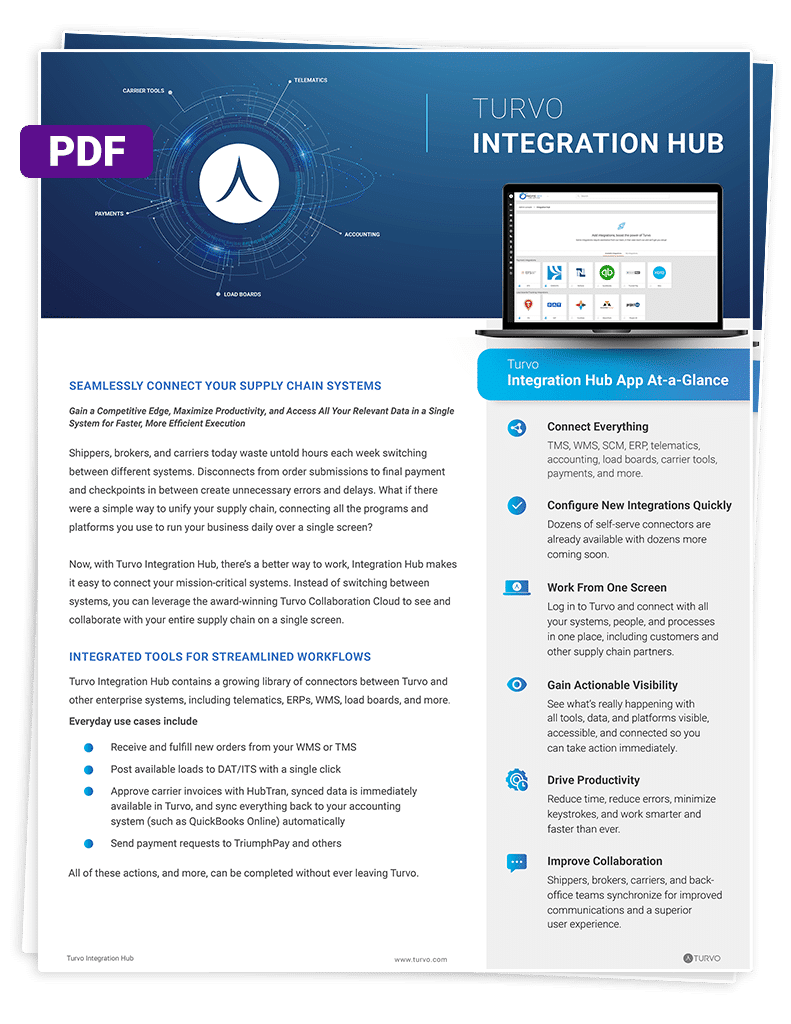
Download the Integration Hub Brief
4. Evaluate How the Software Handles Exceptions Across Teams
Normal workflows are important, but supply chain disruption is where disconnected systems become most visible.
Test scenarios such as inventory becoming unavailable, a shipment arriving late, an order changing, a carrier missing a milestone, or a facility being unable to receive freight as planned.
Check who receives the information, what context they can see, how responsibility moves between teams, and whether external partners can participate when needed.
The goal is to reduce the time employees spend discovering what happened before they can decide how to respond.
5. Match the Platform’s Scope to Your Actual Operating Complexity
More functionality is not always better.
A business focused mainly on transportation coordination may not need deep manufacturing planning or procurement functionality. A global manufacturer, on the other hand, may require broader order, warehouse, inventory, supplier, and international transportation capabilities.
Consider the locations, business units, modes, facilities, partners, systems, and transaction volumes the platform must support.
Then compare that requirement with the implementation and ongoing administration needed to operate the software. The best fit should cover the complexity you genuinely have without forcing the organization to maintain capabilities it does not use.
Connect the Supply Chain Work That Matters Most
Supply chain software creates more value when information can move with the work instead of being repeatedly transferred between people and systems.
For freight brokers and 3PLs, Turvo connects transportation execution with orders, partner collaboration, visibility, documents, integrations, and settlement workflows, helping teams coordinate freight through a more connected operating environment.
Book a Turvo demo to see how those workflows could fit into your existing supply chain technology stack.
FAQs
1. What Is Supply Chain Management Software?
Supply chain management software helps businesses coordinate processes such as orders, inventory, warehousing, transportation, fulfillment, partner communication, and related operational information across the supply chain.
2. What Does Supply Chain Management Software Do?
It can connect planning and execution, automate repetitive workflows, improve visibility, coordinate partners, manage orders and transportation, and provide analytics for operational and supply chain decisions.
3. What Features Should Supply Chain Management Software Have?
Important features can include order management, transportation management, inventory visibility, warehouse connectivity, automation, exception management, analytics, partner collaboration, and integrations with existing enterprise systems.
4. How Much Does Supply Chain Management Software Cost?
Pricing varies according to modules, users, transaction volume, integrations, implementation requirements, and organizational complexity. Enterprise platforms typically require customized quotes based on the deployment scope.
5. Who Should Use Supply Chain Management Software?
Manufacturers, retailers, distributors, 3PLs, freight brokers, carriers, and other businesses can benefit when supply chain processes become difficult to coordinate across teams, partners, locations, or systems.